D. Sidney Potter Shares Expert Insights on Real Estate and Tiny Homes

This is a topic matter that is worth revisiting given real estate is always an applicable conversation trend that is always germane. Many will pontificate that a community can strengthen its own traditional environmental knowledge through the integration of social and ecological justice. As an example, the conservation effort of increasing deforestation for charcoal production in Ghana is of concern. Similar to what I’ve mentioned in pervious articles, this is a moral dilemma for the Western world given they have already benefited from the exploration and exploitation of land through their own insidious exploits worldwide – for which BRIC nations and the Southern hemisphere in general would like to exploit as well (which is harmful ecologically), but is getting pushback from Western nations. To offset the economic commerce lost by third world countries, they have been asked to tap on the brakes in mineral exploration. But should they?
Realistically thinking, why should the black and brown of this world be deprived of achieving their “highest and best use” (an oft used real estate term connected to commercial development), just like “whitie” did in the industrial revolution of the 19th century! Aren’t they entitled to their nut as well. Right? Maybe not! Kinda! Notwithstanding and as a result, the Western world has essentially capitulated to a form of “payola” – as some critics have coined it, in that billions will be paid out over the next decade for unexploited real estate. The price tag currently paid by Western nations is $300 billion payable by 2035, which is substantially below the $1.3 trillion the underdeveloped nations are asking. More specifically, it’s known as the New Collective Quantified Goal for climate finance, finalized by the UN at the COP29 summit in Baku, the capital and commercial hub of Azerbaijan. This agreement dictates the amount of financial support wealthy nations are expected to provide or mobilize for developing countries, in return they do not industrialize and pollute the world.
Notwithstanding the latter, there is a substantial body of work that explores this very topic matter as highlighted in the title of this exploratory concept. As an understatement, the apex between real estate and SEJ (Social and Ecological Justice) is nearly a scholastic enclave of its own. This short article will only explore two facets in relation between real estate and the apex of social and ecological justice, because quite frankly, there are multiple angles. The tenacles are far too many to cover on a cursory examination and what this article is tasked in accomplishing. As such, the first task is to highlight the classical and emerging views of SEJ as it pertains to real estate, and by real estate – that is meant by the more primal aspects of the real estate industry – either it be land development, climate and topography changes, residential home sales or geography and war. Meaning for example as it relates to home sales, how does ecological irresponsibility and social mandates effect the value of real estate, and vice versa. The second task is to highlight traditional approaches and recent approaches to solve issues as it pertains to real estate social and ecological justice.
Nature of Social and Ecological Justice in Terms of Both Classical and Emerging Views
There are some sociologists and academic theoreticians who have theorized that the crux of social and ecological justice as it relates to real estate has as its most basic tenant – is to concern itself around the environmental impact of residential and commercial developments. And in relation to that, that consideration should be given to thinking outside of the box on how home ownership can be attained outside of the basic model. An example of alternative models to home ownership will be discussed later, but first, let’s talks about a very big topic, that being tiny homes, are lack thereof.
What about Tiny Homes?
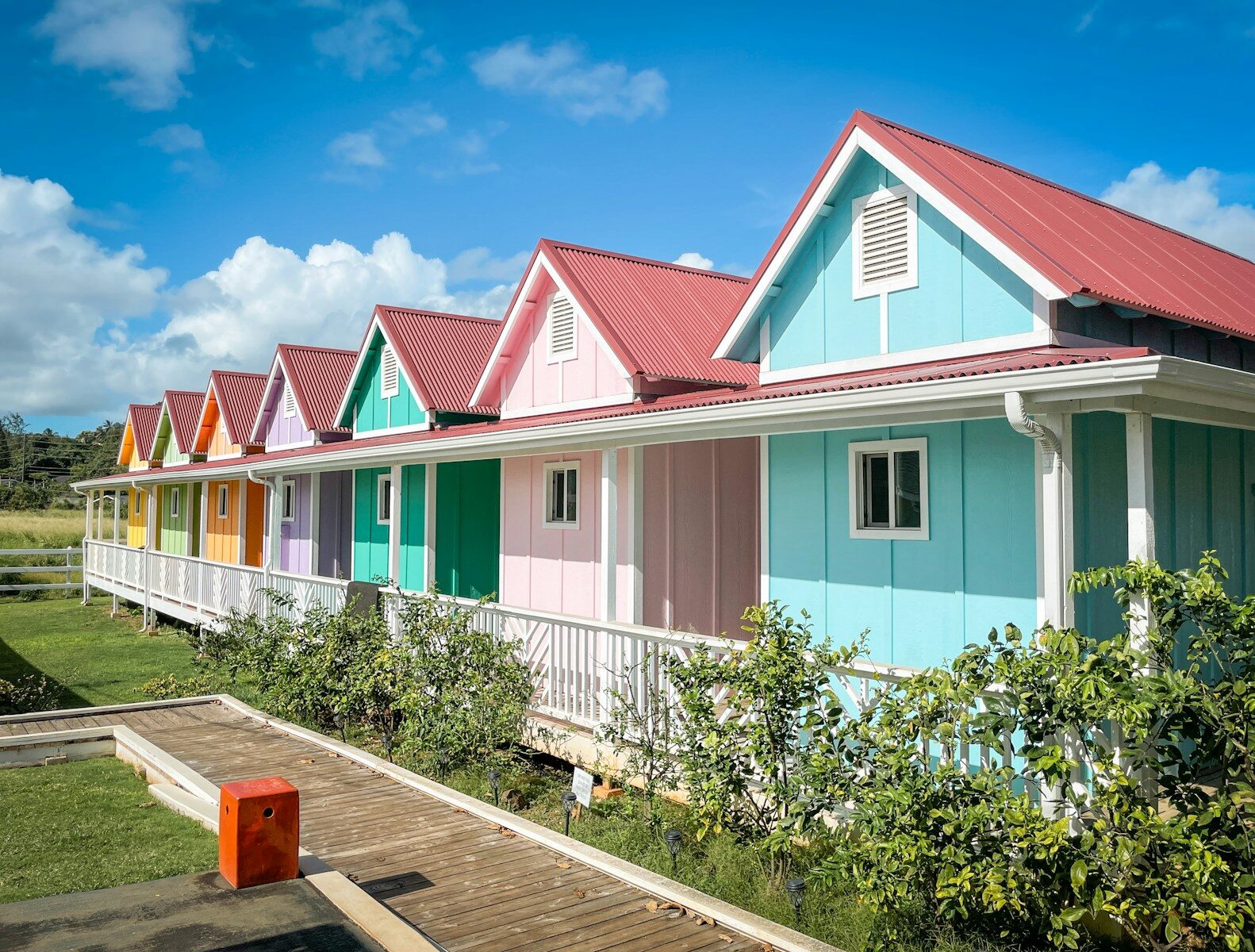
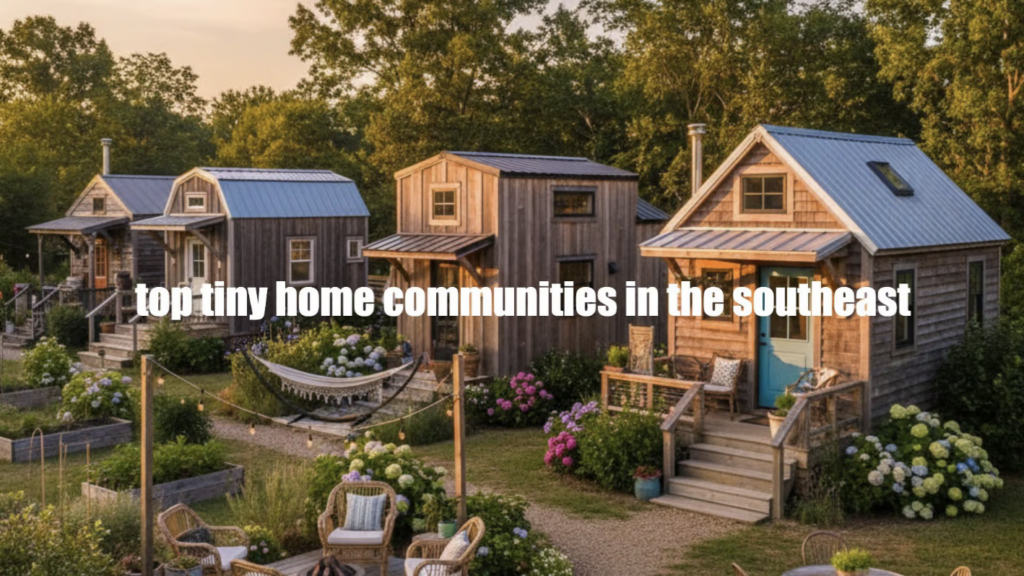
Cutting edge and stylistic home models today suggest consideration should be taken into account when assessing the environmental impact to the footprint of living communities, in addition to placing a larger emphasis to communities that in the past where marginalized when taking into account home living arrangements. As an additional postulation, I would recommend that the major home developers of this nation, such as the Pulte, KB Homes, Lennar, and Shea Homes, start to mass produce tiny homes on site like there is NO tomorrow! Following the tried-and-true playbook of master planned communities since the beginning days of Del Webb, the same cookie cutter approach can be done for tiny homes, whose petite size of 100 to 400 square feet, with most popular designs clustering around 225 square feet, would be perfect for any community that is facing a housing shortage.
This compact footprint makes a tiny house roughly nine times smaller than a standard single-family home. Least one not forget, ADU’s, otherwise known as accessory dwelling units, provide flexibility for a tiny home owner to build (or move) a standalone ADU on their plot of land to accommodate an aging parent, a displaced friend – or get this, even as a rental (I mean why not. Go home or go Big). Notwithstanding, this scenario will necessitate a minimum acreage of at least a 4,300 square feet lot, as to avoid an overcrowded visual Smorgasburg of tiny homes clustered together like a UN refugee camp. Presently, ADU’s are all the rage now in hundreds of cities, counties, municipalities and parishes across the country given their medicinal effect on the housing shortage. But in the big picture, ADU’s are really only a Band-Aid on the housing crisis.
The ultimate beauty of tiny homes is that nearly everything connected to its development, is American made, by American workers, on American fuckin’ soil.
Taking a page out of Henry Fords’ mantra that his assemble-line workers ought to be able to afford the cars they build, much can be said with the advent, industrialization and commoditization of tiny home communities. Much the same way the industrial military complex is part n’ parcel with the DNA of America, it would be a large home builders ‘wet dream’ to monetize the aspirational wishes of housing advocates. In the end, irrespective that the latter scenario is a Freudian mis-match between Wall Street pinstripers meets left leaning Birkenstock wearing socialists, it frigging works. Just like in Field of Dreams, if they build it, they will come.
The evolution of small homes or tiny homes (either or), is a concept that needs to be breeding across the United States. Theoretically, these should be 50 to 150 acre master planned communities, whose counterpart are the Del Webb-esque full blown master planned communities that house (pun intended) the atypical 1,500 to 3,000 square foot sized homes; but in this Utopian world, small 100 to 450 square foot homes in mini-communities that have parks, post office stations, libraries, child care and community centers with pickleball courts and business centers, similar to the typical 2,500+ acre sized master planned community I lived in during the early to mid-2000’s in Anthem, AZ, located 20 miles outside of Phoenix.
Classical Views of Social and Ecological Justice
Notwithstanding master planned communities, one of the prevailing classical views on SEJ as it pertains to real estate, is to tackle systemic inequalities concerning the stability, affordability and access to decent housing. Advocates of this perspective have viewed this to be a fundamental human right, full stop! Part n’ parcel with this disposition, is to stop housing discrimination at all levels. Some of the primary tenements of the classical view are the following:
- Wealth-building: This is of primary importance when building generational wealth and requires the ability to qualify for a mortgage to attain homeownership.
- Fair housing: The thought process of this classical view, is that in advocating for fair housing, it lessens the barriers for the dispossessed in occupying a home based on financial merit.
- Affordability: Plain and simple, affordability is defined as spending no greater than 30% of ones’ take-home pay on housing costs.
- Addressing systemic inequality: By attacking these matters head on, such as systemic inequality, it is believed barriers to matters pertaining to real estate – through the lens of social justice – will be substantially less pervasive in society.
Emerging Views of Social Ecological Justice
Henceforth, emerging views of justice in real estate incorporate ecological concerns and recognize that marginalized communities often bear a disproportionate burden of environmental harm while reaping fewer environmental benefits. Some of the primary tenements of this progressive disposition is the following: Ecological justice, which means an equitable distribution of risks, the open and fair use of natural resources (whose core is distributive justice), and the recognition by government powers that social and ecological mechanisms are irreversible linked – and as such, one effects the other.
Exploration of Theoretical Foundations of Traditional Approaches & Recent Approaches
In 2021, a group of researchers, based primarily in Germany, summarized the following:
An exploration of the theoretical foundations of social and ecological justice (SEJ) in real estate reveals a shift from market-based traditional approaches toward recent, more equitable and community-focused models. Traditional views often treated land as a commodity for capital accumulation, while recent approaches center SEJ principles to address historical inequities and environmental harms. As the researchers opine, given the “…current political climate, sustainability policies seem to be everywhere, but so does the social and ecological critique of these policies… (and as such) …we articulate the seeds of an emerging cross-sectoral shift away from sustainability and toward social-ecological justice,” per the writings of researchers, Kartin Grossmann and James Connolly.
Compare & Contrast the Evolution and Expansion of SEJ Field, Based on Review of Literature
To be clear, “Ecosystem services justice is an emergent research field,” according to writing Anne Langemeyer. Despite this newness – relatively speaking, there is an arch in literature, yesteryear and today. With respect to this article and its focus on SEJ from a purely real estate perspective – albeit a bit jaundiced, wherein one of the more primal aspects of the real estate industry – either it by commercial real estate brokerage, mortgage operations, land development or residential home sales, is the brutish aspect of its everyday existence. As activist Kim Robinson observed the irony, that environmentalists were engaged in the temporary and literal propping up of real estate via the actions of glaciologists, who “pump out water from under glaciers to slow their slide into the ocean.” As Robinson points out, “It’s never too late to start doing the right things,” which seems to be the mantra of today’s literature on SEJ, which takes a more assertive and aggressive – if one dare say, to environmental activism.
In a day and age where some of the more assertive corners of the SEJ movement have no issue in spray painting Telsa vehicles as an act of protest and the torching of large gas guzzling SUV’s on car lots, one cannot imagine that John Autobon, founder of the Audubon Society, a chief and influential bulkhead of the ecological and environmental movement – before SEJ formally existed, agreeing to advocate their position by spray painting the side of horse and buggy carriages. Perhaps maybe, Theodore Roosevelt, who signed legislation establishing five national parks, might have secretly thought of this vandalism as not a bad idea, but the SEJ movement as a whole – and the literature it produces is a mixture of the old and new that is very much open to a more assertive disposition, given their literature has taken a page out of Malcolm X’s playbook, in that the “by any means necessary” ideology is in fact part of the ‘a la carte’ menu in effectuating social and environmental justice.
A writer that makes a good contrast between capitalism and indigenous people, is Brianna Sharpe. Albeit reading Sharpes literature, More than Words (which is similar to Mark Bracher’s Literature and Social Justice), did not seem to pinpointedly blame capitalism as the primary culprit against native languages, but it’s hard not to presume that precept. Her primary position, is that biodiversity directly impacts and is in fact an existential threat to the indigenous language of native people. The prevailing theory has to be, that organizations in present day now, as in 2026, are beginning to realize that language has an intrinsic relation to the land, and as such, will put social and ecological justice in first position – or at the very least, a seat at the table when it comes to properly prioritizing societally ecological priorities.

Emerging literature in the field of social and ecological justice as it relates to real estate, which is vast, can be narrowed down to historical injustices and contemporary environmental crises. Recent publications, such as that from Chayanika Perera of Utrecht University and her fellow researchers, focus on more pertinent issues, such as the latter. Other entities that have shifted the focus of SEJ on real estate include writings from Diana Hernández, via partially supported by the Center for Environmental Health in Northern Manhattan, as published in the National Institutes of Health.
To a certain extent, these writings are more concerned about restorative justice then past issues related to real estate, and in particular real estate housing, that in the past had a more global and expansion focus on fair housing issues, such as red lining – while still important, does not compare to emerging literature today, that has more an emphasis in environmental issues and even more radical issues, such as putting a cap on house appreciation – for apparently the purpose of stemming the negative proclivities of capitalism, but more realistically, to stem – much the same way “rent control” promulgates affordability in New York City (applicable to all units built before 1947), and more famously, Santa Monica, CA, which makes housing more affordable for the masses, which is a direct tie-in into the “social justice” aspects of real estate.
Another emerging issue for real estate as it relates to social and ecological justice, and very much today the Bull in the China shop epiphany, is real estate and war, two subjects often intertwined, since the never-ending battle of resources, and the need of a stronger nation to culturally, logistically and geographically dominant another people or nation, is always apart of nation building. This of course is at the expense and consequence of pursuing or maintaining those stated goals of SEJ.
Author Bio

Real estate writer D. Sidney Potter, is based in Southern California. He has a PhD (ABD) from the University of Arizona, a law degree (Juris Master) from Florida State University College of Law and a bachelor’s degree (BA) from Cal Poly Pomona in political science. Seen here in Las Vegas slowly contemplating his amateur art collection, which includes limited edition giclée prints from Blair Breitenstein of New York (Vogue, Harper’s Bazaar, Neiman Marcus), multimedia limited edition lithographs from visual industrialist artist Benjamin Edwards (husband of Neera Tandem, Biden administration), and original water color pieces from Ukrainian artist Gregory Radionov (Saatchi Art).