
How Keep FL Clean Encourages Zero Waste Fashion

The Lowdown on Clothing Swaps with Keep FL Clean Founder Nicole Arguello Miami is home to a thriving cultural landscape, but a particularly inspiring movement is taking root as local innovators champion sustainability in fresh, imaginative ways. After attending my first community clothing swap last month, I became intrigued by how the concept has been adapted throughout the city. That curiosity led me to the monthly clothing swaps hosted at Tea & Poets in South Miami – and, more importantly, to Nicole Arguello, the founder of Keep FL Clean, a local nonprofit established in 2019 dedicated to environmental advocacy and community action. As the host behind these vibrant gatherings, Nicole has spent years cultivating a space where environmental consciousness meets effortless style. What started as an effort to combat textile waste has blossomed into a thriving community movement, proving that sustainable fashion in Miami is not just a passing trend – it is a lifestyle shift. I chatted with Nicole to discuss the origins of Keep FL Clean, the staggering reality of fashion waste, and how swapping our wardrobes is helping to reshape South Florida’s eco-conscious future. Here’s what unfolded. 1) What inspired you to start Keep FL Clean? Keep FL Clean is an initiative I founded with the goal of bringing people together to take meaningful action for our environment, inspired by our motto “Be the change you want to see in the world.” Through our beach and park cleanups, sustainable education pop-ups, clothing swaps, recycling initiatives, and community events, we create opportunities for people of all ages to get involved and make a difference right here in our own communities. 2) I’m so curious, how did the concept of starting a clothing swap come about? When we started hosting Keep FL Clean’s Monthly Community Clothing Swaps in 2022, we wanted to create a fun, accessible, and truly sustainable way for people to revamp their closets while giving their unwanted clothing a second life. What started as a simple idea has grown into so much more than a clothing swap – it’s become a space for community, connection, and creativity. 3) For those interested in attending a clothing swap hosted by Keep Fl Clean, what should attendees keep in mind and look forward to? When you’re ready to clean out your closet or switch up your style, bring the clothing, shoes, and accessories you no longer want to our swap, where you can find your pieces a new home and discover your new favorites – all for free. We even offer free alterations and repairs by local designer Hani Apparel, so you can customize or repair pieces you find at the swap and make them truly your own! To me, that’s what makes the swap so special. Instead of buying something new every time you want to change up your style, you can shop within your own community, keep perfectly good items circulating, and give them a new life. 4) How does Keep FL Clean’s zero waste clothing swaps benefit the environment and community? There is an enormous amount of clothing being donated around the world, but not every donated item ultimately finds a new home. Some pieces can sit in warehouses or go unsold, and the reality is that there simply aren’t enough traditional outlets to absorb the amount of clothing we’re constantly producing and donating. Our goal is to create a more direct, circular solution: when you bring something to our swap, there’s an opportunity for it to find a new owner immediately. And we don’t stop there! Any clothing left over after our swaps is donated to local nonprofits that help distribute these items to communities and countries affected by poverty and natural disasters. So even if a piece doesn’t find its new owner at the event, we work to make sure it continues its journey rather than ending up in the landfill. 5) What is most meaningful to you when you see members from the community participating in the monthly clothing swaps? What means the most to me is seeing people realize that sustainability doesn’t have to be complicated or expensive. It can be as simple as swapping a shirt with your neighbor, picking up trash at your local beach, or choosing to reuse something instead of buying new. When we come together as a community, those small actions add up to something much bigger – and that’s the kind of impact I hope Keep FL Clean continues to inspire. Exploring Clothing Swaps and Zero Waste Fashion It’s easy to feel overwhelmed by the scale of the global textile crisis or to view sustainability as an abstract goal reserved for grand lifestyle overhauls. But what Keep FL Clean proves so brilliantly with their monthly clothing swaps is that real change starts right in our own closets – and it can actually be fun. By trading the impulse to buy new for the joy of sharing what we already have, we aren’t just keeping clothes out of landfills; we’re actively choosing connection over consumption. Not only that, partaking in zero waste fashion benefits the community, and planet earth.
Payroll Software for Art Galleries and Museums: What Should You Look For?
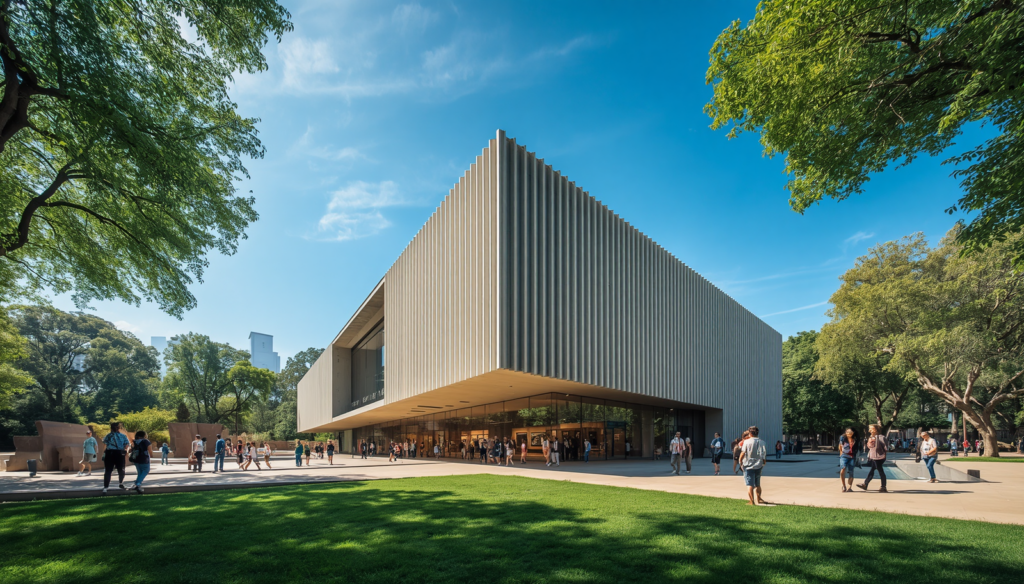
Galleries and museums might not look like particularly complicated workplaces from the outside. Behind the exhibitions, however, there can be a surprisingly varied workforce. A single venue might employ permanent administrators, part-time visitor services staff, casual gallery attendants, technicians, cleaners and event staff. Opening hours can change around exhibitions, launches and public programs. Employees may work evenings, weekends or at more than one location. That makes payroll about more than entering someone’s hours at the end of the week. For Australian museums and galleries, there is another consideration. Fair Work includes museums and galleries within the Amusement, Events and Recreation Award, although the award that applies to an individual employee still depends on the circumstances of their employment. The award includes provisions covering matters such as penalty rates and overtime. So what should a gallery or museum actually look for when choosing payroll and workforce software? 1. Rostering that can handle changing opening hours A gallery rarely operates on exactly the same staffing pattern every week. A new exhibition may require additional front-of-house coverage. An opening night could run well into the evening. School visits, workshops and weekend events can create short periods where additional staff are needed. Good rostering software should make it easy to change shifts, see employee availability and understand labour costs before the roster is published. This becomes more important when casual employees regularly cover gaps or staff move between different roles and locations. 2. Time and attendance for casual and event staff The roster records what was meant to happen. Payroll needs to know what actually happened. An employee rostered until 5:00 pm might stay until 6:30 pm because an exhibition launch runs late. Someone may start early to prepare a gallery space, take a different break or cover another employee’s shift. Those differences need to be captured accurately. Digital time and attendance can reduce the reliance on handwritten timesheets, spreadsheets and employees reconstructing their hours later. It also gives managers a clearer record to review before those hours reach payroll. This matters because payroll accuracy often breaks before payroll even begins. If the hours going into payroll are wrong, even good payroll software can produce the wrong result. 3. Payroll that handles different employee arrangements Museums and galleries can have a mix of salaried, part-time and casual employees working across very different schedules. That means the payroll system needs to handle more than a standard Monday-to-Friday workforce. For Australian organisations, it is worth checking how the software manages the pay conditions that apply to your employees, including classifications, overtime, weekend work, public holidays, allowances and other relevant rules. The important question is not simply whether the software “does payroll”. It is how much manual work is required to get from an employee’s actual hours to the correct pay outcome. 4. Keeping rostering, attendance and payroll connected This is easy to overlook when comparing software. A gallery might have a perfectly capable rostering system, a separate app for recording attendance and another platform for payroll. Each tool may work well individually. The problem appears between them. Someone still needs to export a timesheet, import it elsewhere, correct an employee record or reconcile a shift that changed after the roster was published. Research into the operational risks of separate rostering, timesheet and payroll tools makes the same point: every additional handover creates another place where information can be delayed, duplicated or changed. For galleries with changing rosters or multiple venues, reducing those handovers can be more useful than adding another standalone feature. 5. Employee records and HR Payroll is only one part of managing employees. Museums and galleries may also need somewhere to keep contracts, leave records, employment details, onboarding documents, qualifications and other workforce information. Smaller organisations can often manage these records manually. As the team grows, particularly across several venues, having employee records connected to the same workforce system can make administration considerably easier. What are some payroll software options for galleries and museums? There is no single platform that will suit every organisation. ClockOn is worth considering for galleries and museums with casual, part-time or shift-based staff. Its Australian payroll software connects with rostering, time and attendance and HR tools, which makes it particularly relevant where actual hours, roles and changing shifts need to move through to payroll without being repeatedly entered into separate systems. A broader independent overview of ClockOn also looks at its approach to combining these workforce functions. Tanda is another Australian option aimed heavily at hourly and shift-based workforces, with rostering, time tracking, payroll and HR available within its platform. Deputy is well known for rostering and time tracking and now also offers payroll and HR functionality in Australia, making it another platform worth comparing for organisations with variable schedules. Employment Hero offers payroll alongside HR, rostering and broader employee-management tools, and may suit organisations looking for a wider HR platform rather than primarily a roster-to-payroll system. The best choice depends on how the organisation actually operates. A small gallery with mostly salaried staff has very different requirements from a museum operating seven days a week across several venues. Start with the working week itself: who works, when their hours change, how those hours are recorded and how much manual work is currently required before everyone gets paid.
Love Peace Harmony Foundation Unveils New Look for Global Mission

Love Peace Harmony Foundation has introduced a new visual identity designed to reflect the organization’s growth, expanding international reach, and broader vision for creating positive impact in communities around the world. The updated brand represents more than a change in appearance. For the Foundation, it is an effort to create a clearer and more unified expression of the work it has developed across wellness, humanitarian service, environmental initiatives, education, music, community engagement, and global partnerships. Founded by Dr. and Master Zhi Gang Sha, Love Peace Harmony Foundation has built its mission around the idea that individual well-being and positive personal change can contribute to healthier communities and, ultimately, broader global transformation. That philosophy is now being communicated through three central pillars: Nurture yourself. Support others. Heal the planet. The pillars provide a straightforward framework for a wide range of initiatives that might otherwise appear separate. Personal wellness and development fall within nurturing yourself. Humanitarian service, compassion, partnerships, and community programs support others. Sustainability and environmental initiatives contribute to healing the planet. Together, they create a more cohesive picture of what Love Peace Harmony Foundation hopes to accomplish as the organization grows. “Our new identity reflects both how far the Foundation has come and the future we are working toward together,” said Richard Rogers, Executive Director of Love Peace Harmony Foundation. “While our appearance is evolving, our purpose remains the same: to inspire people and communities to create greater love, peace, harmony, well-being, and positive action throughout the world.” The new identity is also intended to make that purpose easier to recognize across the Foundation’s expanding network of programs, events, digital platforms, partnerships, and educational initiatives. The organization’s work has increasingly taken a collaborative approach, bringing together individuals, nonprofits, community organizations, volunteers, and other partners around shared goals. Its programs span areas including humanitarian service, environmental responsibility, wellness, music, education, and community-based initiatives. At the center of that work is the influence of Master Sha, whose teachings and humanitarian efforts have focused for decades on love, peace, harmony, healing, compassion, and service. A Tao Grandmaster, spiritual teacher, healer, author, and humanitarian, Master Sha founded Love Peace Harmony Foundation as part of a broader effort to turn those principles into practical action. His message has reached communities internationally, with an emphasis on encouraging people to improve their own well-being while also contributing positively to the lives of others. The Foundation’s refreshed identity attempts to translate that philosophy into a brand that can work across cultures, programs, and communities while remaining simple enough to understand at a glance. That becomes increasingly important as nonprofit organizations expand beyond traditional charitable models. Today, global foundations are often expected to build communities, develop partnerships, communicate through social platforms, create educational resources, organize experiences and events, and give supporters meaningful ways to participate. For Love Peace Harmony Foundation, the new brand establishes a common identity across those different points of connection. The updated look will be reflected throughout the Foundation’s website, social media channels, programs, events, partnership materials, educational resources, and future community initiatives. But the organization is emphasizing continuity as much as change. Its central purpose remains focused on encouraging people to bring greater love, peace, harmony, compassion, healing, and service into everyday life. The new identity is intended to make that message easier to communicate while creating room for the Foundation to continue evolving. There is also an important idea behind the simplicity of the new three-pillar framework: meaningful global change does not always begin with large institutions or sweeping initiatives. It can begin personally. Someone can improve their own well-being. They can support another person or contribute to their community. They can make choices that are more responsible toward the environment. Multiplied across individuals and communities, those actions can become something much larger. It is that connection between personal action and collective impact that continues to shape the Foundation’s direction. As Love Peace Harmony Foundation enters its next chapter, the organization is positioning its new identity as a foundation for further growth rather than a departure from its past. The appearance may be new, but the underlying ambition remains expansive: helping build a world shaped by greater love, stronger communities, improved well-being, service to others, and a healthier planet. More information about Love Peace Harmony Foundation and its global initiatives is available at lovepeaceharmony.org.
How Director Amara Karim Is Redefining Portraiture Through Film
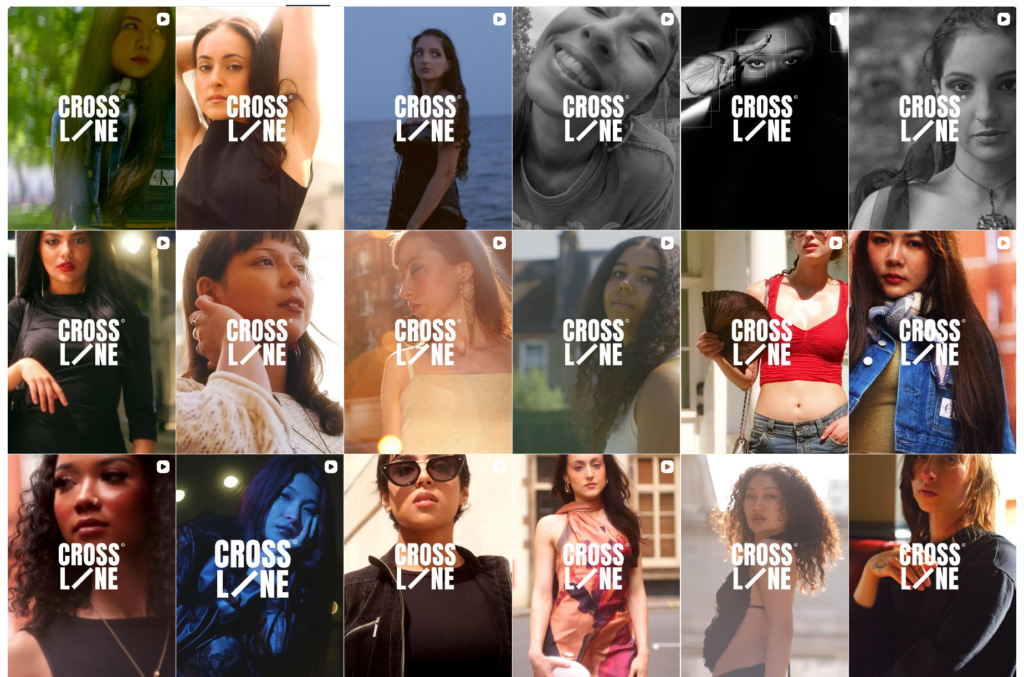
The filmmaker behind CROSSLINE Editorial Film Portraits is quietly reshaping the way portraiture is experienced. Portraiture has traditionally been associated with still photography. For London director and cinematographer Amara Karim, however, a portrait is something far more immersive. Through his creative platform CROSSLINE, Karim is pioneering an approach he describes as Editorial Film Portraits—a fusion of fashion, cinema and human expression. Built around the belief that movement reveals personality just as much as appearance, CROSSLINE creates cinematic short films that capture atmosphere, emotion and identity through carefully crafted visual storytelling. Every frame is intentionally designed, allowing each subject to become part of a narrative rather than simply the focus of a photograph. Karim’s filmmaking journey spans more than ten years, during which he has directed commercial productions, music videos and creative projects across multiple disciplines. That experience has shaped a distinctive visual language defined by elegant camera movement, understated storytelling and a refined editorial aesthetic. “The camera isn’t there simply to record someone,” explains Karim. “It’s there to reveal something about them. The moments between poses are often the most interesting because that’s where authenticity lives.” Inspired by the worlds of fashion editorials, independent cinema and contemporary culture, CROSSLINE embraces collaboration as a core part of its philosophy. Models, creators, artists and brands are invited to contribute to projects that prioritise artistic expression over commercial convention, resulting in films that feel both intimate and cinematic. Editorial Film Portraits by Amara Karim Are the New “It” Form of Portraiture Since its launch, CROSSLINE Editorial Film Portraits has steadily attracted a growing network of collaborators who share Karim’s passion for creating meaningful visual work. Rather than chasing trends, the platform has become recognised for its distinctive editorial style, cinematic compositions and carefully considered approach to storytelling. As CROSSLINE continues to evolve, Karim is preparing the next chapter of the project through new collaborations with models, creators, artists and fashion brands across the UK and overseas. With Volume Two currently in development, the platform continues to build an expanding body of editorial work while exploring new creative ideas and partnerships. While independently driven, Karim’s long-term vision is simple: to continue building CROSSLINE Editorial Film Portraits into a recognized creative platform where cinema, portraiture and fashion intersect—creating work that feels timeless regardless of changing trends. About CROSSLINE Founded by director and cinematographer Amara Karim, CROSSLINE is a London-based creative platform dedicated to Editorial Film Portraits. Combining cinematic filmmaking, fashion influences and visual storytelling, the project creates moving portraits designed to feel timeless rather than trend-driven. Follow the journey as CROSSLINE continues to collaborate with models, artists, creators and fashion brands across the UK and internationally. CROSSLINE Instagram: @crosslinestudio.co Amara Karim Instagram: @amarakarimfilm Website: www.crosslinestudio.co YouTube: https://www.youtube.com/@CROSSLINESTUDIOEditorialFilmPo Explore: https://linktr.ee/crosslinestudio
How Social and Ecological Justice Relates to Real Estate: And What about Tiny Homes?
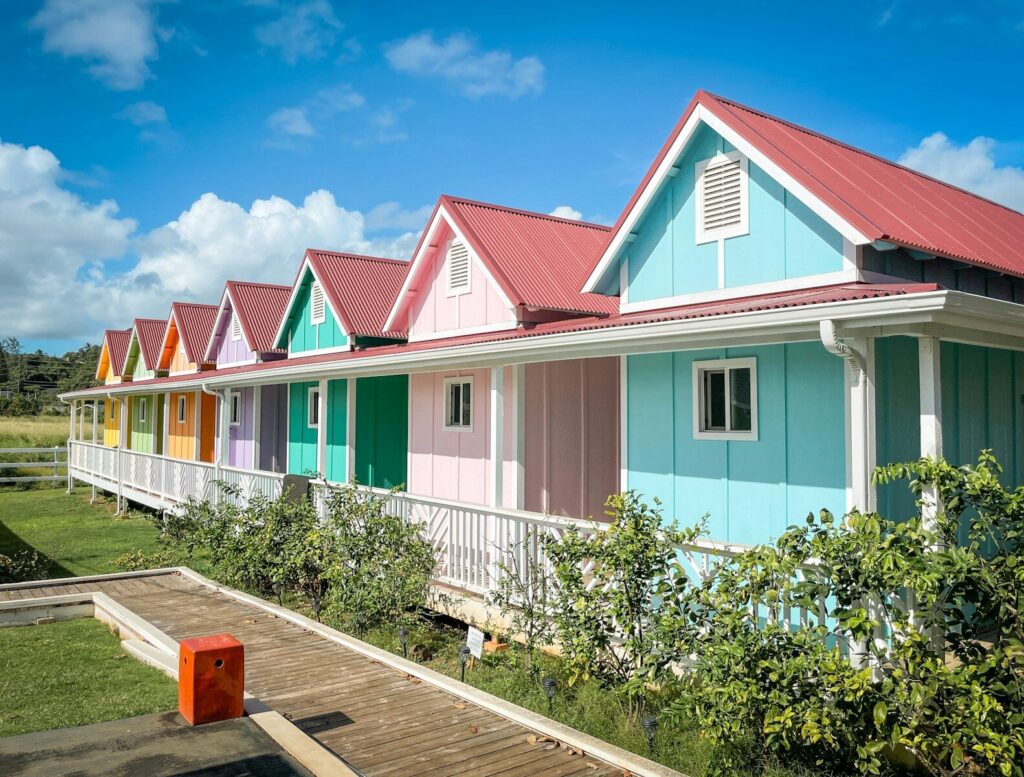
D. Sidney Potter Shares Expert Insights on Real Estate and Tiny Homes This is a topic matter that is worth revisiting given real estate is always an applicable conversation trend that is always germane. Many will pontificate that a community can strengthen its own traditional environmental knowledge through the integration of social and ecological justice. As an example, the conservation effort of increasing deforestation for charcoal production in Ghana is of concern. Similar to what I’ve mentioned in pervious articles, this is a moral dilemma for the Western world given they have already benefited from the exploration and exploitation of land through their own insidious exploits worldwide – for which BRIC nations and the Southern hemisphere in general would like to exploit as well (which is harmful ecologically), but is getting pushback from Western nations. To offset the economic commerce lost by third world countries, they have been asked to tap on the brakes in mineral exploration. But should they? Realistically thinking, why should the black and brown of this world be deprived of achieving their “highest and best use” (an oft used real estate term connected to commercial development), just like “whitie” did in the industrial revolution of the 19th century! Aren’t they entitled to their nut as well. Right? Maybe not! Kinda! Notwithstanding and as a result, the Western world has essentially capitulated to a form of “payola” – as some critics have coined it, in that billions will be paid out over the next decade for unexploited real estate. The price tag currently paid by Western nations is $300 billion payable by 2035, which is substantially below the $1.3 trillion the underdeveloped nations are asking. More specifically, it’s known as the New Collective Quantified Goal for climate finance, finalized by the UN at the COP29 summit in Baku, the capital and commercial hub of Azerbaijan. This agreement dictates the amount of financial support wealthy nations are expected to provide or mobilize for developing countries, in return they do not industrialize and pollute the world. Notwithstanding the latter, there is a substantial body of work that explores this very topic matter as highlighted in the title of this exploratory concept. As an understatement, the apex between real estate and SEJ (Social and Ecological Justice) is nearly a scholastic enclave of its own. This short article will only explore two facets in relation between real estate and the apex of social and ecological justice, because quite frankly, there are multiple angles. The tenacles are far too many to cover on a cursory examination and what this article is tasked in accomplishing. As such, the first task is to highlight the classical and emerging views of SEJ as it pertains to real estate, and by real estate – that is meant by the more primal aspects of the real estate industry – either it be land development, climate and topography changes, residential home sales or geography and war. Meaning for example as it relates to home sales, how does ecological irresponsibility and social mandates effect the value of real estate, and vice versa. The second task is to highlight traditional approaches and recent approaches to solve issues as it pertains to real estate social and ecological justice. Nature of Social and Ecological Justice in Terms of Both Classical and Emerging Views There are some sociologists and academic theoreticians who have theorized that the crux of social and ecological justice as it relates to real estate has as its most basic tenant – is to concern itself around the environmental impact of residential and commercial developments. And in relation to that, that consideration should be given to thinking outside of the box on how home ownership can be attained outside of the basic model. An example of alternative models to home ownership will be discussed later, but first, let’s talks about a very big topic, that being tiny homes, are lack thereof. What about Tiny Homes? Cutting edge and stylistic home models today suggest consideration should be taken into account when assessing the environmental impact to the footprint of living communities, in addition to placing a larger emphasis to communities that in the past where marginalized when taking into account home living arrangements. As an additional postulation, I would recommend that the major home developers of this nation, such as the Pulte, KB Homes, Lennar, and Shea Homes, start to mass produce tiny homes on site like there is NO tomorrow! Following the tried-and-true playbook of master planned communities since the beginning days of Del Webb, the same cookie cutter approach can be done for tiny homes, whose petite size of 100 to 400 square feet, with most popular designs clustering around 225 square feet, would be perfect for any community that is facing a housing shortage. This compact footprint makes a tiny house roughly nine times smaller than a standard single-family home. Least one not forget, ADU’s, otherwise known as accessory dwelling units, provide flexibility for a tiny home owner to build (or move) a standalone ADU on their plot of land to accommodate an aging parent, a displaced friend – or get this, even as a rental (I mean why not. Go home or go Big). Notwithstanding, this scenario will necessitate a minimum acreage of at least a 4,300 square feet lot, as to avoid an overcrowded visual Smorgasburg of tiny homes clustered together like a UN refugee camp. Presently, ADU’s are all the rage now in hundreds of cities, counties, municipalities and parishes across the country given their medicinal effect on the housing shortage. But in the big picture, ADU’s are really only a Band-Aid on the housing crisis. The ultimate beauty of tiny homes is that nearly everything connected to its development, is American made, by American workers, on American fuckin’ soil. Taking a page out of Henry Fords’ mantra that his assemble-line workers ought to be able to afford the cars they build, much can be said with the advent, industrialization and commoditization of tiny home communities. Much the same way the industrial
Stanek Gallery in Miami Kicks Off Summer Group Show
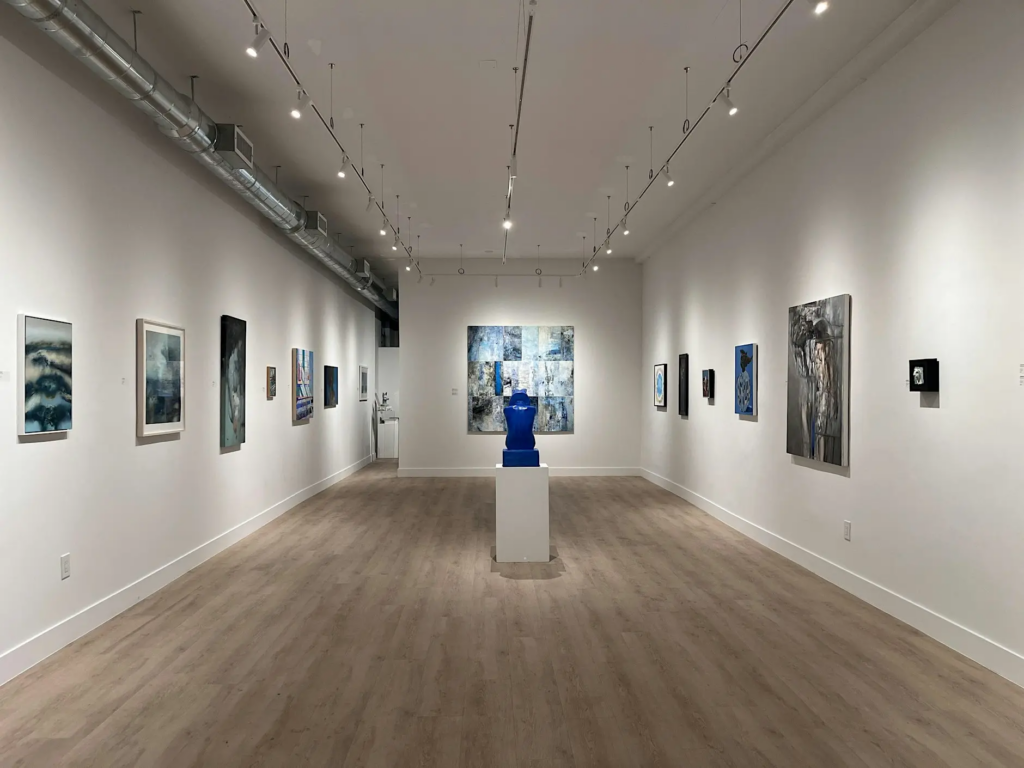
Where Language Becomes Art As the Miami summer hits its stride, the city’s cultural pulse is finding a perfect rhythm at the Stanek Gallery. This season, the gallery is shifting its focus to the power, shape, and resonance of language with its highly anticipated Summer Group Show—an event that promises to be as intellectually stimulating as it is aesthetically electrifying. If you are looking to kick off your season with fresh art, great company, and the kind of light fare that makes a gallery opening feel like a true celebration, this is the destination you cannot miss. The highlight of this summer’s programming is the exhibition titled WORD. In a world where we are constantly bombarded by digital text, WORD invites us to slow down and consider language not as a mere vessel for communication, but as a primary medium for visual expression. The exhibition is a masterful examination of how text can function as image, material, and memory. By assembling a diverse roster of artists across generations and mediums, the Stanek Gallery has curated a collection that questions the boundaries of visual literacy. Visitors can expect to see language pushed to its physical limits. From painted, raw graffitied structures that evoke the grit of the city to meticulously silkscreened canvases that lend an air of high-fashion refinement, the techniques on display are as unconventional as they are impactful. These artists are stripping words of their standard utility, inviting the viewer to engage with the shape of a thought before processing its meaning. The exhibition posits that when language is treated as texture or color, it transforms the way we engage with the artwork. Whether the intent is poetic, humorous, direct, or profoundly thought-provoking, WORD challenges the viewer to reconsider the power of words to define, reveal, and transform reality. Adding another layer of intrigue is a site-specific installation by artist Katelyn Kopenhaver. Known for her immersive approaches, Kopenhaver is crafting a unique, temporary environment specifically for this gallery space. This installation promises to be the show-stopper of the evening, offering an experiential counterpoint to the more traditional pieces on the walls and anchoring the exhibition in the here-and-now of the gallery’s architecture. This opening event is more than just an exhibition; it is an invitation to immerse yourself in the vibrant energy of the Miami art scene. It is a rare opportunity to engage with local talents alongside national voices, all while debating the nuance of art over a glass of wine. Whether you are a seasoned collector or a curious observer, the Stanek Gallery’s Summer Group Show offers a fresh, necessary perspective on the intersection of text and image. Join us to experience how language, when unmoored from the page, can become the most compelling art of all. Summer Group Show at Stanek Gallery Miami
SUNSET Monaco: The Riviera’s Most Electrifying Canvas of Sound, Art, and Sea

On the Mediterranean shoreline of Monaco, where the Grand Prix transforms the Principality into a global theatre of speed and spectacle, one event has steadily redefined what a beach experience can be. SUNSET Monaco is not simply a party or a music event. It operates as a living cultural platform where electronic music, contemporary art, gastronomy, and Riviera lifestyle converge into a single, fluid environment. Set against the private beach of Le Méridien Beach Plaza, it has evolved into what many now consider the most creatively ambitious and artistically diverse gathering in the South of France. A beach event that becomes a world of its own SUNSET Monaco unfolds over three days during the Formula 1 weekend, transforming a normally serene stretch of coastline into a kinetic, immersive environment. From early afternoon until late night, the beach becomes a continuously evolving stage where sound, movement, and social energy are orchestrated with precision but experienced as spontaneity. According to the official presentation of the event, SUNSET is designed as a place where “sound, style, and spontaneity” collide, creating a curated yet unpredictable atmosphere that blurs the boundaries between festival, art installation, and open-air lounge culture. What distinguishes SUNSET from other Riviera events is its refusal to remain static. The environment shifts throughout the day: daytime barefoot luxury gradually dissolves into sunset rituals, then transitions into high-intensity nighttime performances. The beach is not a backdrop but an active participant, shaping how people move, listen, and interact. A lineup that maps the global language of electronic music At the core of SUNSET Monaco’s cultural identity is its artist programming, which reads less like a conventional festival bill and more like a curated snapshot of contemporary electronic music. The 2026 lineup brings together internationally recognised figures such as DJ Tennis, Seth Troxler, Honey Dijon, PAWSA, Luciano, Carlita, and BLOND:ISH, alongside a new generation of experimental and emerging artists including Mattéo Diop, Salomé Le Chat, Alyssa & Gia, and Suze Ijo. This breadth is not incidental. The programming is deliberately constructed to reflect multiple electronic traditions: Chicago house, Detroit-informed techno, Mediterranean-inflected melodic sets, and global club culture aesthetics all coexist within the same weekend. The result is a rare form of artistic diversity where genres do not compete but interact. A sunset set can shift from deep, atmospheric house into more percussive, club-driven energy without breaking the narrative continuity of the day. This is one of SUNSET’s defining characteristics: music is treated as a continuous spectrum rather than segmented performances. Fred Allard 2026: sculptural pop art in a beach environment In 2026, SUNSET Monaco deepens its commitment to visual art through a collaboration with French contemporary artist Fred Allard. Known for his glossy, hyper-graphic sculptural works that reinterpret luxury objects and pop culture icons, Allard’s practice aligns naturally with the visual language of Monaco itself: polished surfaces, saturated color, and the tension between glamour and critique. His presence at SUNSET introduces a parallel narrative layer to the event. Sculptures and installations are integrated into the beach environment, not isolated in gallery-like zones but positioned within the flow of the space. This creates an environment where art is encountered casually, almost unexpectedly, between music sets and social moments. The effect is intentional: rather than presenting art as a separate discipline, SUNSET embeds it into the rhythm of the event. Fred Allard’s work, with its bold pop-art sensibility and reflective materiality, amplifies this dynamic, turning the beach into a temporary open-air exhibition that evolves with light, tide, and movement. Barefoot luxury and the architecture of atmosphere Beyond music and art, SUNSET Monaco’s defining achievement lies in its construction of atmosphere. The event’s setting at Le Méridien Beach Plaza offers a rare combination: direct Mediterranean access, controlled private space, and unobstructed horizon views that anchor the experience in natural spectacle. The atmosphere is often described as “barefoot luxury,” a term that captures its central paradox. The environment is highly curated yet deliberately relaxed. Guests move between sand, lounge areas, and dining spaces where champagne service, curated food concepts, and spontaneous DJ performances coexist without rigid separation. This approach creates a social environment that feels fluid rather than hierarchical. International visitors, artists, athletes, and local Riviera crowds share the same physical space, contributing to the sense of a temporary cultural microcosm. As the sun descends, the entire site shifts in tone. Light installations, reflective materials, and sea-facing structures respond to the changing sky, turning the beach into a constantly reconfiguring visual composition. When night arrives, the atmosphere intensifies without losing its openness, culminating in late-night sessions that extend the emotional arc of the day rather than interrupting it. SUNSET Monaco succeeds because it does not attempt to imitate traditional festival formats. Instead, it builds its own hybrid language, where sound, art, landscape, and social ritual merge into a unified experience. In a region already defined by excess, prestige, and spectacle, SUNSET stands out not by being louder, but by being more cohesive in its creative vision. It is this synthesis that positions it as one of the most distinctive cultural events in the South of France, and one that continues to shape the evolving identity of the Riviera itself.
Reframing Memory: The Interdisciplinary Practice of Iranian Contemporary Artist Aidin Bagheri

What happens when photography becomes more than a record of reality and begins to function as a form of historical inquiry? For Iranian contemporary artist Aidin Bagheri, images are not passive documents but active participants in the construction of memory, identity, and collective understanding. Working across photography, documentary cinema, installation, and academic research, Bagheri has developed a practice that challenges conventional distinctions between art and investigation, aesthetics and evidence. Based between Tehran and Paris, Bagheri belongs to a generation of artists whose work moves fluidly across disciplines while remaining deeply rooted in lived experience. Trained in sociology, he approaches image-making as a process of observation and engagement, often developing projects through extended periods of fieldwork. Rather than offering definitive conclusions, his work creates space for questions about how societies remember, how histories are constructed, and whose experiences become visible within the public record. Over the past ten years, Bagheri’s work has been featured in numerous solo and group exhibitions, steadily building his presence within both Iranian and international contemporary art contexts. Through these presentations, he has developed a body of work that bridges documentary observation and critical inquiry, engaging audiences with questions of history, identity, labor, and collective memory. The sustained visibility of his practice across diverse exhibition platforms reflects a commitment to long-term research and visual storytelling, positioning him among a generation of artists expanding the possibilities of documentary-based contemporary art. Further underscoring his professional engagement with the Iranian art community, Aidin Bagheri is an official member of the Association of Photographers of Iran and the Association of Sculptors of Iran, affiliations that reflect the interdisciplinary nature of his artistic practice and its dialogue with both photographic and spatial forms. This concern is particularly evident in Zendeh Baad Karkhaneh, a photographic series that examines the lives and working conditions of laborers in Iranian factories. Developed through close observation and sustained engagement with industrial environments, the project moves beyond conventional representations of labor to reveal the human experiences embedded within spaces of production. Bagheri’s photographs capture moments of routine, endurance, and solidarity, drawing attention to the physical and emotional realities that often remain invisible behind systems of manufacturing and economic output. A similarly nuanced approach characterizes Garden of Dolls, a project centered on a remarkable environment created from discarded dolls and recycled objects in the Iranian desert. What could easily be framed as an eccentric curiosity is instead approached with sensitivity and attentiveness. Bagheri’s photographs reveal a space shaped by imagination and resilience, where abandoned materials acquire unexpected significance. The resulting images blur the boundaries between documentary observation and visual metaphor, inviting viewers to reconsider the ways meaning is constructed through acts of creation and preservation. While photography remains central to his practice, Aidin Bagheri has increasingly expanded his exploration of social realities through documentary filmmaking. His recent documentary, Kiln House (2025), focuses on the lives of Afghan workers in Iran, a community whose experiences often remain underrepresented within dominant media narratives. Rather than relying on distant observation, the film foregrounds everyday realities, offering an intimate portrayal of labor, displacement, and dignity. Through careful attention to lived experience, Bagheri presents migration not as an abstract political issue but as a deeply human condition. What distinguishes Bagheri’s work within contemporary visual culture is the close relationship between artistic production and research. His images do not merely illustrate ideas; they participate in the generation of knowledge. This perspective informs his ongoing doctoral research at the École des Hautes Études en Sciences Sociales (EHESS) in Paris, where he investigates the role of citizen photography in contemporary Iran. At a time when billions of images circulate across digital networks, Bagheri’s research asks a fundamental question: who gets to create history? His work examines how photographs produced by ordinary individuals can function as alternative archives, preserving experiences and perspectives that frequently remain absent from institutional records. In an era increasingly defined by contested histories, digital archives, and competing versions of truth, Aidin Bagheri’s work feels especially relevant. By bringing together documentary observation, visual storytelling, and critical research, he demonstrates how contemporary art can serve as a space where memory is questioned, histories are reconsidered, and new forms of understanding become possible.
The Graphic Earth: TopoArtic and the Art of the Cut
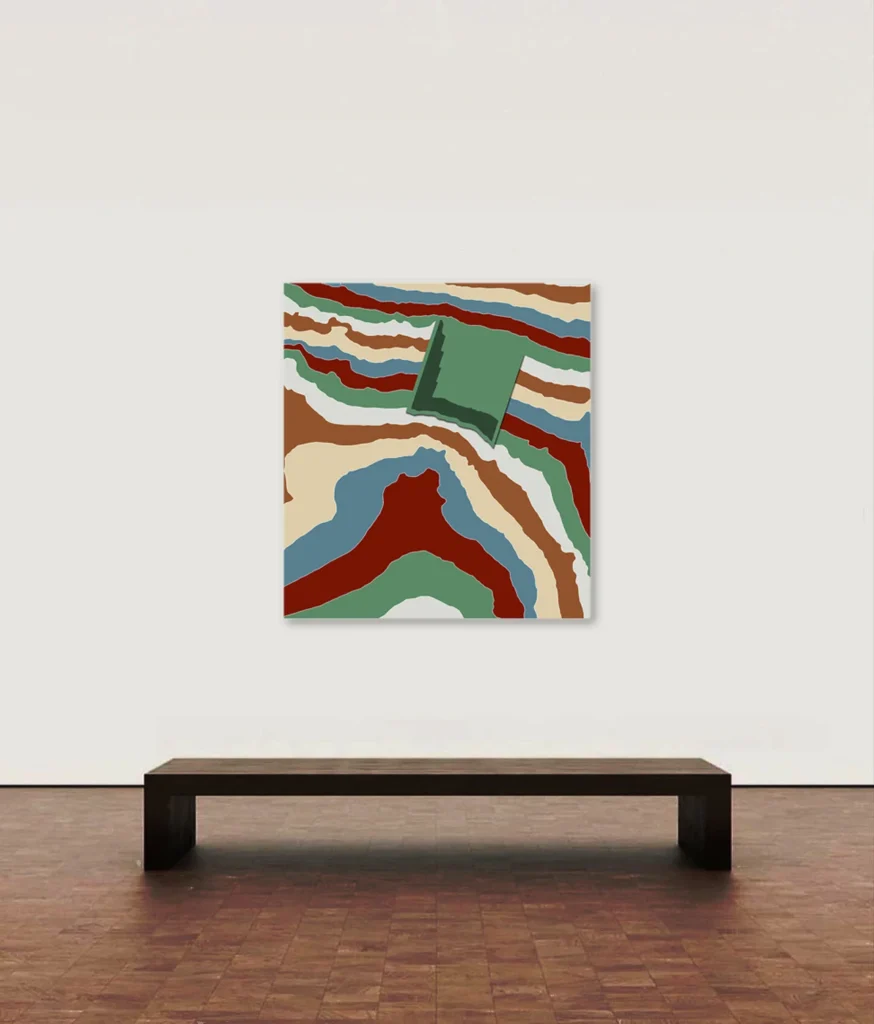
A Body of Visual Art By Ibrahim Nawaf Joharji There is a moment in every mountain excavation when the machinery stops and the exposed layers speak for themselves. Strata of rock, compressed over millions of years, suddenly become visible as a cross-section precise, geometric, and unexpectedly beautiful. Saudi architect and visual artist Ibrahim Nawaf Joharji saw this moment repeatedly while designing hillside villas and developments across the rocky terrain of western Saudi Arabia. Most architects looked past it. Joharji looked directly at it. TopoArtic is the result of that sustained attention. The series extracts the mathematical data of mountain topography governed by the elevation equation z = f(x,y) and translates it into a body of visual art built around a single architectural act: the cut. Each work in the series is a contour section, the same operation that a geologist performs when mapping terrain or that a construction team performs when preparing a slope for building. What TopoArtic isolates is the shadow that the cut produces the depth, the layering, the geological memory that becomes visible only when the mountain is opened. The process is one of rigorous subtraction. Working with grid resolutions between one and five meters, Ibrahim Nawaf Joharji digitally slices through elevation data, removes selected strata, and recomposes what remains. The resulting forms are neither maps nor diagrams. They are fingerprints each mountain’s contour pattern as unique as a biological signature, colored in fields that shift from geological earth tones to vivid synthetic palettes depending on the volume’s conceptual focus. Vol.7, “The First Cut,” introduced the rocky section as primary subject. Vol.9, “For the Upcoming Mansion,” presented a cut terrain as the foundation of an unbuilt house the landscape as architectural proposal rather than background condition. Interestingly, the connection to Pop Art is not stylistic, it is structural. Pop Art elevated the overlooked object: the soup can, the comic strip, the commercial photograph. TopoArtic performs the same operation on overlooked data. The contour line on a survey sheet is the most ignored piece of information in an architectural project. It is the background before the building begins. TopoArtic places it at the center, colors it, cuts it, and asks the viewer to see what was always there before the design covered it over. Moreover, the shadow play that results from the rock cut sections is the series’ most distinctive visual quality. When a horizontal plane is removed from the contour stack, the remaining form casts shadows downward into the void shadows that change with light angle and viewing position in the three-dimensional works. This is not shadow as decoration. It is shadow as geological record, the same darkness that falls inside a quarry face or an excavated hillside. The cut that produces the artwork is the same cut that produces the scar. TopoArtic makes no distinction between them. The full series, spanning thirteen volumes from pure gradient studies to human-form contours to double-mountain cuts designed to host two residences, is documented on the website for INJ Architects at injarch.com/featured_item/topoartic. The work sits at the intersection of architectural research and visual art practice, a territory that Joharji has occupied consistently since founding INJ Architects in Jeddah in 2009, and one that TopoArtic defines with particular clarity. “The earth has always been cut. TopoArtic is simply the first body of work to treat the cut as the art.” – Ibrahim Nawaf Joharji
Johan Siggesson and the Art of Stillness in Wildlife Photography

A Different Kind of Wildlife Photography Johan Siggesson does not photograph wildlife in the traditional sense. His images feel less like documentary moments and more like encounters. There is a silence in them, a deliberate stillness that invites the viewer to pause longer than expected. In a time when wildlife photography often leans toward spectacle and saturation, Siggesson has quietly built a body of work that moves in the opposite direction. Born in Sweden and based in Malta in the Mediterranean, Johan Siggesson has become increasingly recognised for his striking black and white wildlife photography, particularly his portraits of African animals. Lions, elephants, leopards and giraffes appear frequently throughout his work, but not in the way audiences may expect. These are not simply “lion pictures” or “elephant photos” designed to showcase technical skill or dramatic safari moments. They feel personal. Intimate, even. There is a recurring sense that the animals are being met rather than captured. The Power of Simplicity Much of Siggesson’s photography is built around reduction. Colour disappears. Backgrounds dissolve into shadow, mist or dust. What remains is form, posture, texture and expression. The result is work that sits somewhere between fine art photography and portraiture. An elephant emerging through dust in Amboseli becomes almost sculptural. A lion staring directly into the lens feels less like a predator and more like an ancient presence observing the viewer in return. What separates Johan Siggesson from many contemporary wildlife photographers is his willingness to embrace simplicity. In an era dominated by hyperreal editing and visual overload, his work feels restrained. Shadows remain dark. Atmosphere is preserved rather than polished away. Negative space becomes part of the image itself. There are traces of Scandinavian minimalism in the compositions, but also something deeply connected to Africa in the emotional atmosphere of the work. Dust, silence, tension and scale are ever present Patience Over Pursuit A large part of Siggesson’s photography comes from patience rather than constant movement. He often speaks about staying at sightings long after others have left, allowing scenes to evolve naturally instead of chasing activity from one location to another. That philosophy is visible throughout his portfolio. His photographs rarely feel rushed. They breathe. One of his most recognised images features Craig, the legendary tusker of Amboseli, photographed from a remarkably low angle that gives the elephant an almost monumental presence. Another work, “The Dreamer,” captures a quiet and introspective moment of a resting lion. Rather than focusing on aggression or dominance, the image reveals a softer and more reflective side of one of Africa’s most iconic predators. The photograph feels less like traditional wildlife documentation and more like a study of calm, presence and vulnerability. These photographs do not rely solely on action or drama. Instead, they succeed through atmosphere and emotional tension. Black and White as Emotional Language For Johan Siggesson, black and white photography is not simply a stylistic decision. It functions almost as a language of its own. By removing colour, attention shifts toward emotion, texture and presence. Wrinkles on an elephant’s skin, the scars across a lion’s face or the shape of light falling across a leopard become more pronounced. The animals appear timeless. This approach also distances the work from conventional safari imagery. Rather than presenting wildlife as exotic spectacle, Siggesson’s photographs often feel contemplative and deeply human in mood. A cheetah standing silently beside her cub. A giraffe framed carefully between dead trees in the Serengeti. A lioness drinking while locking eyes with the lens. These moments are understated, yet emotionally charged. There is a quiet confidence in allowing simplicity to carry the image. From the Wild to the Gallery Wall Siggesson’s work has increasingly found a place beyond traditional wildlife photography audiences. His photographs are now collected as fine art prints and exhibited internationally, often displayed in large formats that emphasise detail and atmosphere. Printed on museum-grade baryta paper using archival pigment inks, the images are intended as lasting art objects rather than temporary digital content. This focus on craftsmanship mirrors the photography itself. Nothing feels rushed or disposable. Collectors are drawn not only to the wildlife subjects, but to the emotional atmosphere within the images. The work functions equally as nature photography and contemporary fine art. That crossover is significant. Wildlife photography has often struggled to move beyond the documentary world into the broader fine art conversation. Siggesson’s photography helps bridge that gap. A Quiet Voice in a Loud Visual World Despite growing international recognition, awards and exhibitions, there remains something understated about Siggesson’s public presence. The focus consistently returns to the animals and the experience of being in the wild rather than the photographer himself. That perspective may explain why his strongest images feel grounded rather than performative. They do not demand attention through spectacle. Instead, they invite reflection. At a time when visual culture is increasingly driven by speed and endless scrolling, Johan Siggesson’s photography asks viewers to slow down. To observe. To sit with silence for a moment longer than usual. And perhaps that is precisely what makes the work memorable. In the end, Siggesson’s photography is not only about wildlife. It is about presence, atmosphere and the fragile connection between humans and the natural world.
Capturing Creativity On The Streets Of Venice Beach And London
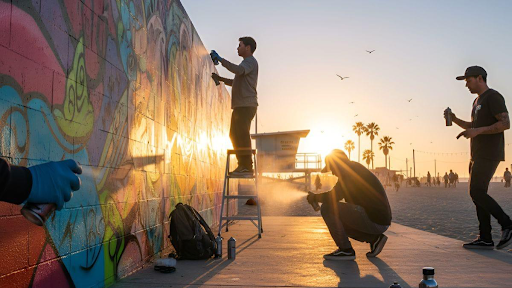
A Reflective Essay by Paige Evans Street art has always fascinated me because it exists completely outside of traditional spaces. It’s public, temporary, unpredictable, and usually created by people who are driven more by expression than recognition. Over the last year, I’ve found myself increasingly drawn to photographing street artists, particularly during a trip to Venice Beach and later back in London. There’s something very raw about the creative energy in Venice Beach. Along the boardwalk, you’re constantly surrounded by painters, musicians, skaters, performers, and muralists all creating in real time. The history of street art there feels deeply connected to the identity of Los Angeles itself, shaped by artists like Jean-Michel Basquiat and Keith Haring, whose work helped blur the line between street culture and contemporary art. Even now, you can feel that influence in the way creativity exists so openly within public space. What interested me most wasn’t necessarily the artwork itself, but the people behind it. A lot of the artists I photographed were creating simply because they had to create. Some were selling pieces to get by, others were painting for hours without anyone stopping to watch. Photographing them became more about documenting presence and process than producing polished portraits. Coming back to London, I noticed similarities within areas like Shoreditch, where street art also exists as part of the environment and culture. But there’s a different energy between the two cities. Venice Beach felt open and performative, whereas London often feels more closed off and observational. Across both places, photographing street artists taught me to slow down and pay attention more carefully. The work became less about chasing perfect images and more about documenting people existing within their creative world naturally. Author Bio Paige Evans is the founder of PANNA DESIGNS, a studio working across web design, photography, and videography, with a focus on visual storytelling and content-led digital experiences.
What to Expect in the Commercial and Residential Real Estate Market in 2026 – D. Sidney Potter

D. Sidney Potter Explains What to Expect The general consensus amongst many market makers in 2026 is a carbon copy of 2025, but slightly more tempered. Nothing wrong with a more somber and palliated forecast, given the heretical nature of 2025, which saw many unforeseeable events. Even jaded fellows such as myself were impressed. To name a few surprises in 2025 – that likely won’t make a reappearance in 2026, include the following: Given the excessive near hypnotic hoopla over Artificial Intelligence, the acceleration of this tech science was unprecedented this past year and was particularly vulnerable to cyber threats. Other outliers included a late surge in buyer activity in Fall 2025 (no one saw that coming, despite high interest rates), the increasing cost of homeowner overhead as a result of climate change (think insurance rates), and the rise of geopolitical events affecting buyer behavior. Real Estate Outlook in Commercial Here’s a bullet list of top highlights to expect in year 2026 of the year of our good Lord over the next 12 months – God willing. And in the light of divine positivity, commercial is discussed first given the sedate nature of residential in 2026, as notated above. Here goes for commercial: Market Outlook in Residential Fortunately, and to lighten the mode a bit, it’s not as if residential real estate is expected to go to Hell in a Handbasket, per se. As a disclaimer, not certain why the religious overtone for this year’s predictions, since real estate is a fairly agnostic science. Could be because the time of year – since forecasts are written during a religious themed month that includes the likes of Christmas, Kwanzaa and Hanukkah. But here goes, and in the interest of brevity, more bullet points: Summary Despite a tranquil and placid forecast for residential in 2026, there will be more movement in some areas; given sales are expected to rise, interest rates are expected to lower, and the pricing on residential product will slow down. Commercial on the other hand is a whole different ball of wax, where one can expect a whole lotta hollering from the back pews as buyers will raise prices and more trades will be at record highs. Until then, rest easy and say a pray to the real estate Gods, in that there are more winners then losers over the next year. Amen. Author Bio Real estate writer D. Sidney Potter is based in Southern California. He has a PhD (ABD) from the University of Arizona, a law degree (Juris Master) from Florida State University College of Law and a bachelor’s degree (BA) from Cal Poly Pomona in political science.
Yinka Shonibare and Peter Doig Paintings: Two Forces Reshaping Contemporary Art
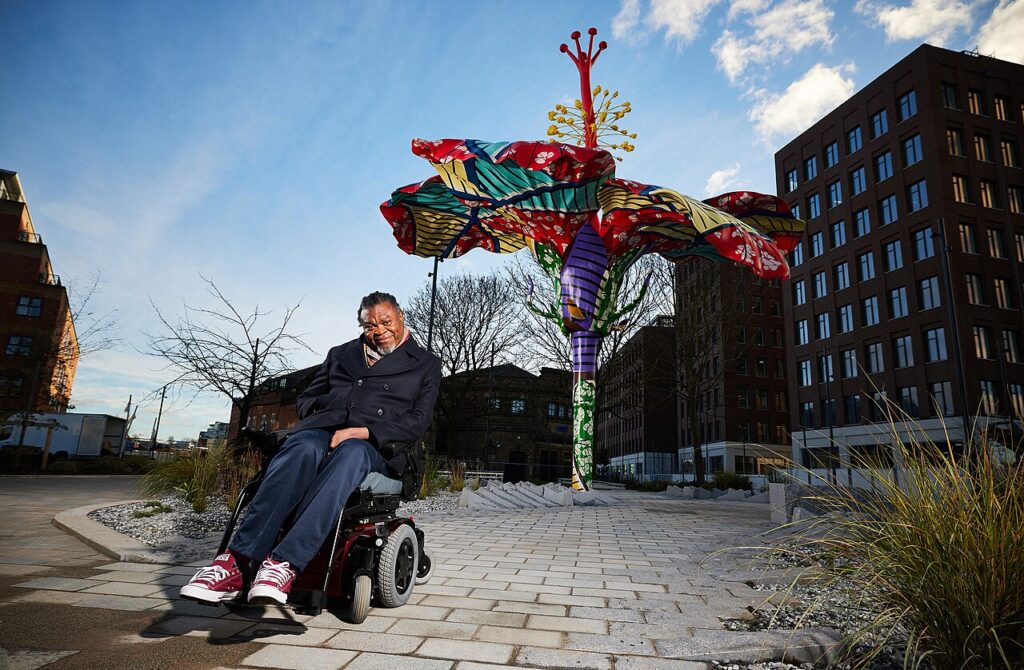
The contemporary art world is experiencing a remarkable surge of interest in works that challenge, provoke, and delight. Peter Doig paintings have emerged as some of the most sought-after pieces in today’s global art market, commanding serious attention from collectors and institutions alike. Alongside this excitement, Yinka Shonibare continues to stand as one of the most significant and thought-provoking voices in contemporary art. Together, these two names represent the vitality and diversity driving the art scene forward. What Makes Peter Doig Paintings Unique in Today’s Art Market Peter Doig paintings occupy a rare space where figuration, memory, and atmosphere converge. Doig builds layered, dreamlike compositions that feel simultaneously familiar and deeply strange. His canvases draw on personal memory, cinema, and vernacular imagery, producing works that resist easy categorization. This resistance to trend is precisely what has made Peter Doig paintings so enduring. Where much contemporary painting chases conceptual or minimal directions, Doig commits fully to the painted surface — to color, texture, and narrative suggestion. At auction, Peter Doig paintings consistently achieve extraordinary results. His work White Canoe sold for over $11 million, and demand shows no signs of slowing. Collectors recognize that these paintings combine aesthetic power with long-term investment value — a combination that is increasingly rare in today’s saturated market. Institutions across Europe and North America have also acquired Peter Doig paintings for permanent collections, further cementing his position as a defining figure of his generation. Yinka Shonibare: Style, Humor, and Artistic Identity Yinka Shonibare CBE is a British-Nigerian artist born in London and raised in Lagos, whose practice spans sculpture, installation, photography, and film. He is best known for works that incorporate Dutch wax fabric — the brightly patterned textile associated with African identity, though rooted in complex colonial trade histories. This layering of cultural identity and historical irony is central to everything Yinka Shonibare creates. His work is visually arresting, conceptually sharp, and laced with a dry, knowing humor that invites viewers to question assumptions about race, empire, and belonging. What sets Yinka Shonibare apart from many of his contemporaries is the deliberate use of joy and spectacle as vehicles for serious critique. His headless mannequins dressed in vibrant fabric recreate aristocratic scenes with a twist — the colonial power structures underpinning those scenes become impossible to ignore. This approach has earned Yinka Shonibare widespread institutional recognition, with major works held by Tate Modern, the Smithsonian, and the Museum of Modern Art. Connecting Yinka Shonibare to Peter Doig Paintings: Shared Themes in a Modern Context On the surface, Yinka Shonibare and Peter Doig paintings seem to operate in different registers — one sculpts and installs, the other paints atmospheric canvases. Yet both artists share a fundamental commitment to storytelling through visual complexity. Peter Doig paintings embed cultural references — Caribbean landscapes, hockey players, film stills — within painterly surfaces that reward sustained looking. Yinka Shonibare similarly constructs scenes laden with historical and cultural reference, demanding that viewers do interpretive work. As contemporary collecting expands, ceramics and tactile art forms are increasingly discussed alongside painting and installation. The conceptual energy that Yinka Shonibare brings to fabric and three-dimensional form echoes the materiality collectors appreciate in Peter Doig paintings. Both practices insist on the physical presence of the artwork — that something irreplaceable happens when a viewer stands before the actual object. This shared insistence on material experience explains why both Yinka Shonibare and Peter Doig paintings attract collectors who value depth over decoration. Why Collectors, Galleries, and Online Platforms Are Investing in Peter Doig Paintings Galleries from London to New York actively seek Peter Doig paintings for group and solo exhibitions. The works carry critical credibility alongside commercial appeal — a combination that makes them highly versatile for both public programming and private acquisition. Online platforms including Artsy and Sotheby’s digital sales have introduced Peter Doig paintings to a new generation of collectors who discovered contemporary art through digital channels and are now willing to invest significantly. Beyond the market, Peter Doig paintings are understood as documents of a particular moment in painterly thinking — a time when representation returned to prominence without abandoning conceptual ambition. That cultural significance only deepens with time. Yinka Shonibare and Peter Doig Paintings Define the Contemporary Moment The contemporary art world is richer for the presence of both Yinka Shonibare and Peter Doig paintings. Doig’s luminous, memory-saturated canvases and Shonibare’s fabric-draped critiques of empire arrive from different directions but share a common ambition: to make images that matter. For collectors, galleries, and anyone paying attention to where art is headed, Yinka Shonibare and Peter Doig paintings are not simply trending names — they are essential reference points for understanding creativity, identity, and value in the twenty-first century. Photo Credit: Yinka Shonibare CBE RA in front of the Hibiscus Rising sculpture by David Lindsay.
Ahlam Expands Beyond Fashion with Sculptural Collaboration by Jonas Macek

Ahlam, the Saudi Palestinian fashion label whose name translates to “dream” in Arabic, continues to expand its creative language beyond clothing through a recent sculptural collaboration. Originally launched in the UAE and now establishing a presence in London, the brand has built a distinct identity rooted in contemporary interpretations of Middle Eastern culture. Its growing visibility, including features from Mille World and Hypebeast Arabia, places Ahlam among a new wave of designers shaping regional narratives on an international stage. As part of this evolution, the brand collaborated with London based designer Jonas Macek to develop a contemporary art piece that explores identity, geography, and the material expression of language. The result is a 3D printed sculpture depicting a hand holding a globe, a form that reflects both support and expansion. Across the surface, subtle markers indicate locations tied to the brand’s cultural footprint, including the UAE, Palestine, and the United Kingdom. Embedded within the structure is the word “Ahlam” in Arabic, not applied as a surface detail but integrated directly into the form. This approach transforms the script into something spatial and physical, shifting it from graphic to object. The piece sits outside of traditional fashion formats, functioning instead as a sculptural extension of the brand’s identity. By moving into three dimensional form, Ahlam continues to explore how its narrative can exist beyond garments. Developed through digital fabrication, the work takes advantage of 3D printing to achieve fluid geometries and complex surfaces, allowing for a more experimental yet precise translation of concept into form. Speaking on the collaboration, Macek notes: “Rather than treating the identity as something applied onto an object, the idea was to embed it directly into the structure. It becomes part of the form itself, not just something you see, but something that holds the piece together.” The collaboration forms part of an ongoing creative relationship between Ahlam and Macek, with further sculptural works and cross disciplinary projects currently in development. Together, they are exploring how fashion identity can extend into objects, environments, and physical experiences. As Ahlam continues to grow across regions, this expanding body of work signals a broader direction for the brand, one that moves fluidly between fashion, art, and design, building a more immersive and spatial expression of its identity. References
From Face Paint to Stage Lights: Snazzy Brings Colour, Creativity, and Imagination to New York

Creativity doesn’t always begin in studios or galleries. Sometimes, it begins with a brush, a few pots of colour, and a child’s imagination. This summer, Snazzy, a new play written by British actor and producer Joe Staton, brings the vibrant origin story behind the globally recognised face-painting brand Snazaroo to the New York stage as part of the New York Theatre Festival. Blending nostalgia, colour, and human storytelling, the production celebrates creativity in its purest form — playful, spontaneous, and driven by imagination. Born in the 1980s at British holiday camps, Snazaroo began as a creative experiment. What started as simple face-painting to entertain children quickly evolved into something much bigger. Colour became character, imagination became performance, and everyday moments became living works of art — the kind created not on canvas, but on smiling faces. Snazzy explores that journey, but more importantly, it captures the artistic spirit behind it. The play leans into the joy of creativity — the idea that art doesn’t always need to be prestigious or formal to be meaningful. Sometimes, it’s simply about connection, colour, and play. That idea is captured beautifully in a line from the end of the play: “I paint now for the sheer joy. The idea is about bringing a smile to a child’s face. Forget the artistic recognition, the power, the profit and the competition; none of that would happen without the children and their desire to make-believe.” The production also brings together a dynamic cast of artists whose work reflects that same spirit of creativity and collaboration. Among them is Ronan Spierenburg, an actor from Taunton whose grounded, nuanced performances bring both warmth and authenticity to the stage. His ability to shift between humour and emotional depth makes him a compelling presence in the ensemble. Joining him is Naomi Orange, a vibrant force in the New York theatre scene and founder of Fruit Fly Theatre, a company dedicated to bold, imaginative storytelling. Orange’s work as both a performer and creative leader brings an exciting energy to the production, aligning perfectly with Snazzy’s playful and inventive world. The cast also includes Ross Mason and Brenna Peerbolt, both exceptional performers bringing depth and humanity to the story. Staton previously worked with Peerbolt at Cumberland Theatre in Murder on the Orient Express and The Taming of the Shrew, where her dynamic presence and emotional range left a lasting impression. Presented by RiffRaff NYC, a company dedicated to supporting immigrant artists and globally resonant storytelling, Snazzy feels particularly at home in New York — a city built on creativity, reinvention, and bold artistic voices. The production will be presented at LATEA Theatre as part of the New York Theatre Festival this July. Tickets are available here: https://newyorktheaterfestival.com/snazzy/ A GoFundMe campaign is also underway to help support actors and cover rehearsal costs: https://www.gofundme.com/f/snazzy-by-joe-staton-help-cover-production From holiday camp creativity to the New York stage, Snazzy is a celebration of imagination, colour, and the simple magic of creating something that makes people smile.
MADEACSI Turns Furniture Into Art for People Who Refuse Ordinary Spaces

Miami-based studio creates bespoke furniture where design meets individuality and every piece is crafted as a personal artwork. MADEACSI is redefining the relationship between furniture and art with one-of-a-kind pieces that are as expressive as a painting and as functional as everyday design. Guided by the motto “Where design meets individuality,” the studio invites clients to experience furniture as a direct extension of their identity rather than a generic object pulled from a catalog. Headquartered in Miami, Florida, MADEACSI is a U.S.-based company strategically positioned in one of the country’s most vibrant hubs for design, culture, and luxury living. The company is in the process of hiring personnel in the United States to support its growth, local production, and client services, underscoring its longterm commitment to building operations and creating jobs in the American market under the leadership of founder and owner Fabrizio Vitali. Built around a philosophy of personalized artistry, MADEACSI uses its own design language as a flexible framework that can be tuned to different lifestyles, spaces, and tastes. Rather than imposing a single, rigid look, the studio treats each commission as a dialogue, aiming for results that feel both recognizably MADEACSI and unmistakably personal to the client. The studio’s Standard Collection showcases projects based on designs and styles personally created by the team, giving an accurate idea of the reality and quality of their work. The pieces shown in the gallery are not limited by the colors and materials presented; they serve as a starting point. Clients can discuss modifications, finishes, and other customizable options during an included consultation, turning each model into a unique, site-specific artwork. Alongside this, the Wine Collection explores furniture as atmosphere, focusing on how a single piece can transform a room’s mood and character. Using form, material, and tone the way an artist uses composition and color, MADEACSI designs pieces intended to anchor a space — creating warmth, intimacy, or drama, depending on the context and the client’s vision. At the core of MADEACSI’s practice is a strong commitment to artisanal craftsmanship. Each piece is crafted with careful attention to structure, joinery, finishing, and tactile detail, ensuring that visual impact is matched by durability and comfort in everyday use. This focus on skilled making positions MADEACSI within a growing movement that sees furniture as both functional design and collectible art. MADEACSI’s process begins with a consultation that aims to understand the client’s style, space, and needs. From there, the studio proposes configurations, palettes, and materials that align with both the physical environment and the story the client wants to tell through their interior. The goal is not simply to fill a room, but to create focal points that inspire daily and reshape how the space is experienced. “Your home should look like you, not like a showroom,” says founder Fabrizio Vitali. “Our role is to translate personality into form — combining artisanal craftsmanship with a bold visual language so every piece feels personal, intentional, and memorable.” Each MADEACSI object is conceived as a lasting presence in a room, not just another decorative accessory. In an era of copy-and-paste interiors and mass-produced décor, MADEACSI offers an alternative for collectors, design lovers, and culture-driven homeowners who see furniture as another canvas for self-expression. The studio’s work fits as comfortably in a design-forward home as it does in the pages of a contemporary art and design magazine. For more information, to explore the Standard and Wine Collections, or to start a custom project, visit https://www.madeacsi.fatacsi.com/.
Marko Guglielmi Reimmortal and His Visionary Geosound Project
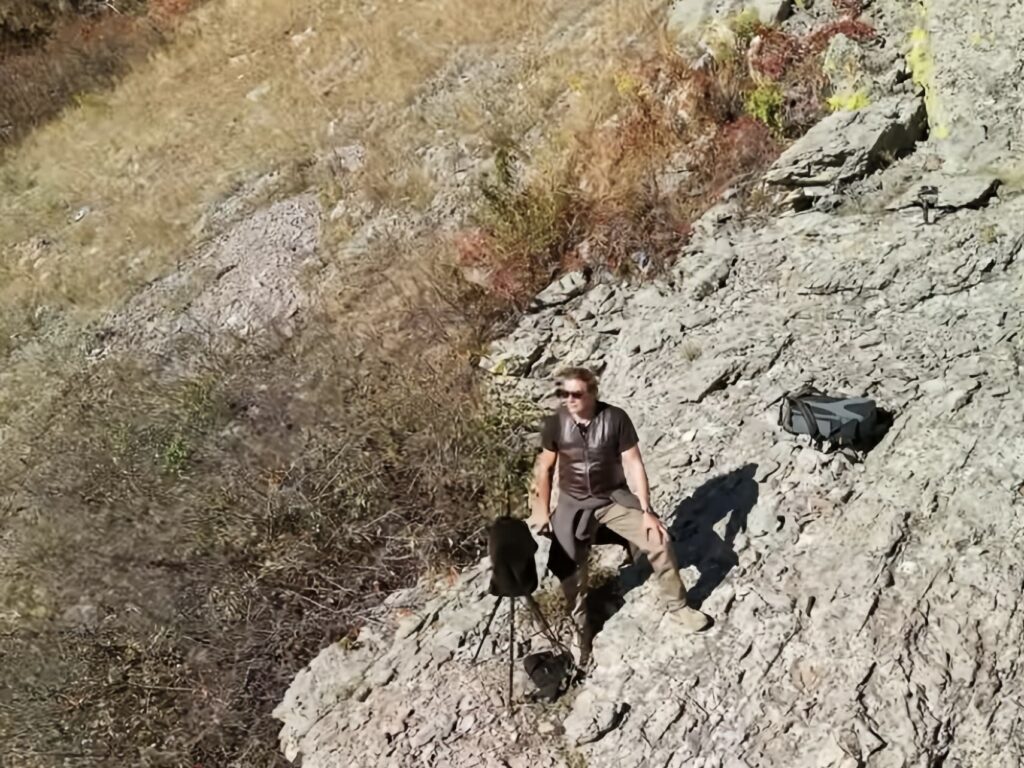
Listening to the Memory of Sacred Places For more than four decades, multidisciplinary artist and sound designer Marko Guglielmi Reimmortal has pursued the idea that certain landscapes do not merely exist in space, but resonate as living acoustic organisms. His “Geosound Project” treats sacred sites not as picturesque backdrops or coordinates on a map, but as living archives that store a unique vibrational imprint – a sonic memory slowly being erased by modernity. A crucial driving force behind the Geosound Project is the artistic trajectory of its creator, Marko Guglielmi Reimmortal, a visionary sound designer, visual artist and performer whose career has long moved at the intersection of experimental music, large-scale installation and advanced audio technology. He dedicates his works on the connections between sound and vision, he has founded studios, led experimental music projects, composed for film and performance, and developed immersive environments in which sound becomes a structural material as concrete as steel or stone. His large conceptual installations have been exhibited on major international stages – including the Venice Biennale and contexts linked to Art Basel Miami – and have earned him awards such as the “Lorenzo il Magnifico” prize for installation at the Florence Biennale, reinforcing his reputation as an internationally recognized and award-winning artistic director capable of orchestrating complex, multidisciplinary projects that speak to both specialized audiences and the broader public. The project’s first decisive turning point came after an initiatory journey with a Sioux medicine man to Bear Butte, the sacred mountain in South Dakota where Native communities have sought visions for generations. There, Guglielmi Reimmortal understood that recording a sacred place is not a neutral technical act but a ceremony. Before a microphone is unpacked, permission must be asked twice: from the human custodians of the place, and from the land itself. A Hidden Architecture of Sound Sacred spaces around the world often share a striking property: they sound different. A canyon revered by the Navajo answers to the wind with its own inner geometry, shaping echoes that have been sculpted over millennia. Natural caves used as temples transform a single human voice into a complex cloud of resonances, amplifying specific frequencies that can propel listeners into altered states of awareness. In Amazonian sacred forests, overlapping strata of vegetation compose an intricate acoustic cathedral, where insects, birds, leaves and distant water weave a polyphonic soundscape. Modern acoustic research is beginning to describe, in the language of physics and neurology, what Indigenous cultures and ancient builders have long intuited. Studies in archeo-acoustics show that many megalithic sites were not only aligned with celestial events but also tuned to particular frequencies. The hypogeum of ĦalSaflieni in Malta, for instance, emphasizes frequencies around 110 Hz – a band contemporary neuroscience associates with specific changes in brain activity and meditative states. Ancient architects may not have had digital analyzers, yet they clearly possessed a sophisticated empirical understanding of how shape, stone and air interact to influence human consciousness. A Crisis You Can Hear, But Rarely See This delicate relationship between sound, space and psyche is under unprecedented pressure. Unregulated mass tourism, accelerated urbanization, noise pollution and climate change are all reshaping the soundscapes of sacred environments faster than they can be understood. A sanctuary that once resonated with endemic bird calls now reverberates with engines and loudspeakers. A cave whose deep silence once allowed visitors to hear their own heartbeats amplified is invaded by generators and ventilation systems. Forest temples, once protected by a continuous acoustic veil of foliage, are fractured by new roads and the distant hum of traffic. The loss is not limited to “pleasant” natural sounds. What is disappearing is a complete system of relationships: how human rituals, environmental rhythms and architectural forms once co-created specific sonic conditions that supported spiritual technologies refined over centuries. When those conditions crumble, entire ways of relating to the land and to collective memory disappear with them. From Field Ritual to Vibrational Archive The Geosound Project by Marko Guglielmi Reimmortal positions itself as a response to this silent crisis. Its ambition is to document, with both technical precision and cultural sensitivity, the sonic fingerprints of sacred sites across the globe before they are irrevocably altered. Using advanced, often custom-designed recording chains, the project captures not only the audible spectrum but also the wider frequency bands that give each place its distinctive acoustic identity. The methodology borrows from cinema, music production, science and ritual. Three dimensional, holophonic recordings reproduce the experience of presence within a site, while spectral analysis reveals how specific frequencies are amplified, damped or modulated by the space. Detailed resonance maps trace how sound moves through chambers, corridors, groves and rock formations. The result is not a simple collection of field recordings but a growing digital atlas of vibrational signatures – a kind of “sonic DNA” for each location. What sets this project apart is the insistence that every recording session begins long before any equipment is switched on. Each mission is built around dialogue with Indigenous and local communities, especially those who maintain ceremonial relationships with the site. Protocols vary from place to place, but the principle is constant: no microphone enters a sacred space without the consent and guidance of its human guardians. Rituals, offerings and shared time on the land are treated not as picturesque accessories but as essential conditions for capturing an authentic vibrational portrait. Reciprocity With the Custodians of Place In an era when extractive approaches to culture are increasingly challenged, the Geosound Project openly rejects the model of the solitary researcher arriving, collecting data and disappearing. The work is framed as an exchange. Communities share access to their sacred places and their knowledge; in return, they receive tailored documentation that can support cultural continuity, education and even future protection efforts. These materials can take different forms: high-resolution audio archives for local cultural centers, listening experiences designed for schools, or technical dossiers that help articulate why a specific site’s acoustic integrity deserves protection. By weaving together physics, anthropology, Indigenous epistemologies
Art Review: Yahaya Yisa’s “Unveiled Identity” Balances Beauty and Defiance
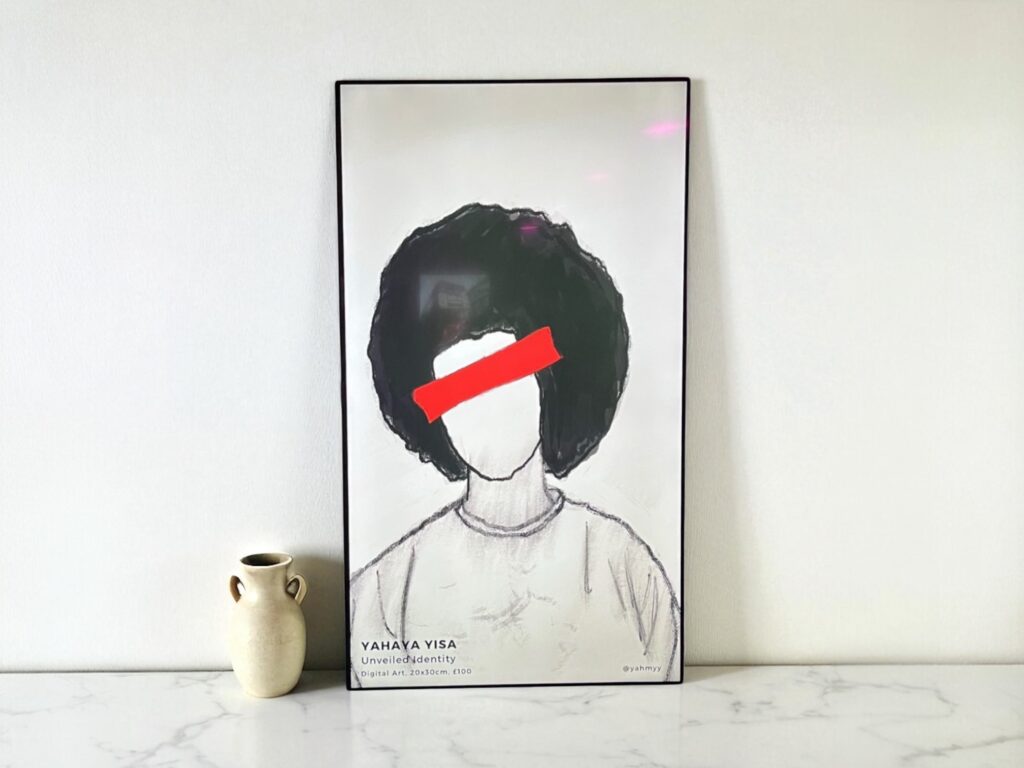
In Unveiled Identity (2023), artist Yahaya Yisa delivers a striking meditation on what it means to be seen and what it costs to be authentic. The piece is minimalist in form yet dense with meaning, using only a few key elements to evoke a deep sense of tension between freedom and constraint. At the center of the composition stands a single figure, distinguished by a proud, voluminous Afro that serves as a visual homage to natural beauty, ancestry, and resistance. Against a muted background, the Afro becomes more than a hairstyle; it becomes a halo, a crown, a statement of self-definition in a world that often dictates how identity should be presented. Cutting sharply across this image, however, is a red bar, simple in shape but loaded with symbolism. It conceals the figure’s eyes or mouth, a deliberate act of erasure that interrupts communication and visibility. The color choice is no accident: red evokes both passion and suppression, danger and vitality. Yisa uses it to mark the intersection where culture, self-expression, and censorship collide. What makes Unveiled Identity so compelling is its balance of restraint and emotion. The composition is sparse, yet every line feels intentional. The contrast between the textured richness of the Afro and the flat rigidity of the red bar captures the push and pull between individuality and the systems that seek to define it. The piece suggests that even in moments of suppression, there remains a quiet defiance, a refusal to be fully silenced. Yisa’s visual language is contemporary but deeply rooted in cultural consciousness. His work continues a lineage of artists who explore the politics of visibility, from postcolonial portraiture to Afrofuturist aesthetics, yet his tone remains intimate and personal. The figure in Unveiled Identity is not just symbolic; it feels lived in, as though drawn from the artist’s own reflection or the shared experience of a generation negotiating selfhood in the digital and social gaze. The artwork’s power lies in its duality. It celebrates identity while acknowledging the barriers that still surround it. It is both a declaration and a question, both unveiled and obscured. The viewer is left to wonder: how much of ourselves do we show, and how much do we conceal to survive? With Unveiled Identity, Yahaya Yisa affirms his growing reputation as a voice unafraid to engage with the contradictions of modern identity. In its simplicity, the piece speaks volumes about heritage, courage, and the ongoing struggle to exist on one’s own terms.
Luxx Optica, One Joli Girl Host Artsy Gathering in Palm Beach
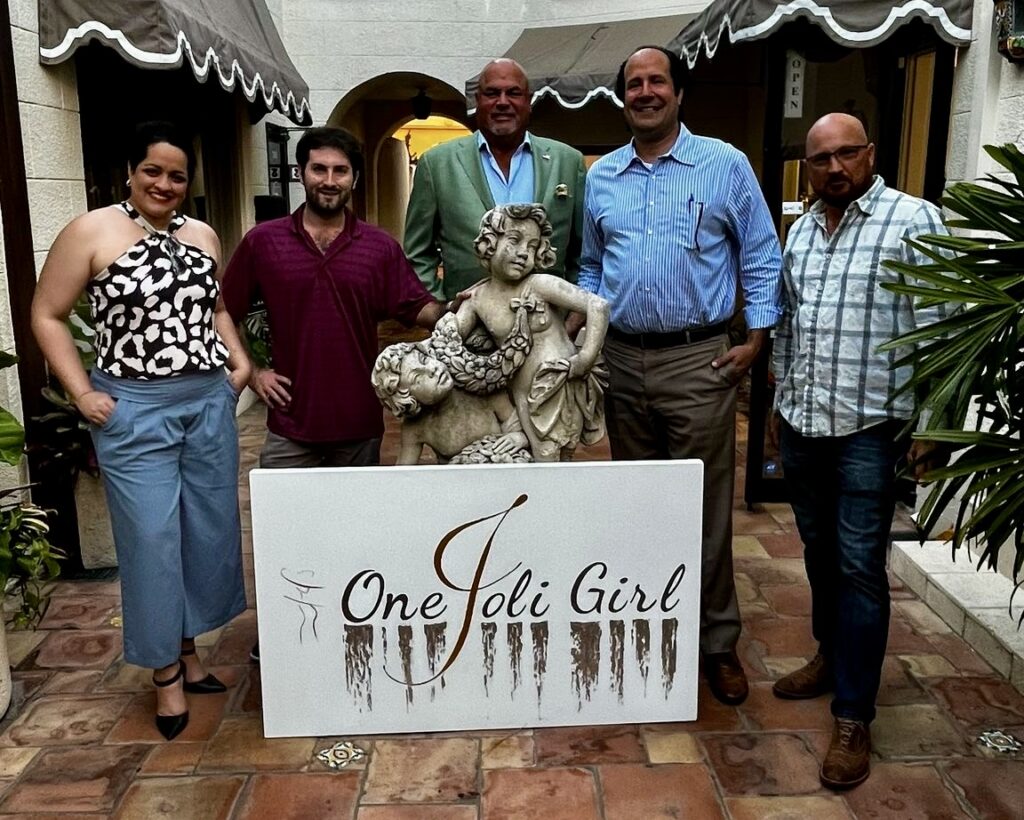
The evening of Thursday, April 17th, saw a stylish confluence of art, big-eye binoculars, and professional networking at the exclusive social gathering hosted by Luxx Optica and One Joli Girl, held at 323 Worth Avenue, Suite B, in Palm Beach, Florida. Guests were treated to an artsy networking event with drinks in tow, seamlessly blending the worlds of luxurious World War II binoculars, fashion, and captivating curated art. The spotlight shone on the mesmerizing works by Todd Kenyon and Meliza Ruby Abreu (aka. Melrub), whose artwork and sculptures added a unique dimension to the sophisticated ambiance. Attendees mingled amongst the striking pieces, sparking conversations and adding an artistic flair to the evening. Models in attendance had an opportunity to chat with the team from One Jolie Girl, known for their model management, photography, and casting services. The official venue, Luxx Optica gallery in West Palm Beach, showcased stunning World War II binoculars with high-precision optics, which have been meticulously restored to their original glory, as well as a mix of finely-made reproductions. The intricate details and craftsmanship of these historic binoculars are truly a sight to behold, transporting visitors back in time to the era of the war. Each pair tells a unique story of its own. READ: 5 Popular Art Techniques Capturing Artist’s Hearts The event was a perfect blend of art, fashion, and networking, leaving everyone inspired for what’s to come. If you are an art collector and interested in purchasing functional artwork for your home or commercial space, send an email to sales@luxxoptica.com. For models interested in exploring the expert services of One Joli Girl, contact their team at onejoligirl@gmail.com. View this post on Instagram A post shared by One Joli Girl LLC. (@onejoligirl)
Pop Art: Its Beginnings and Influences
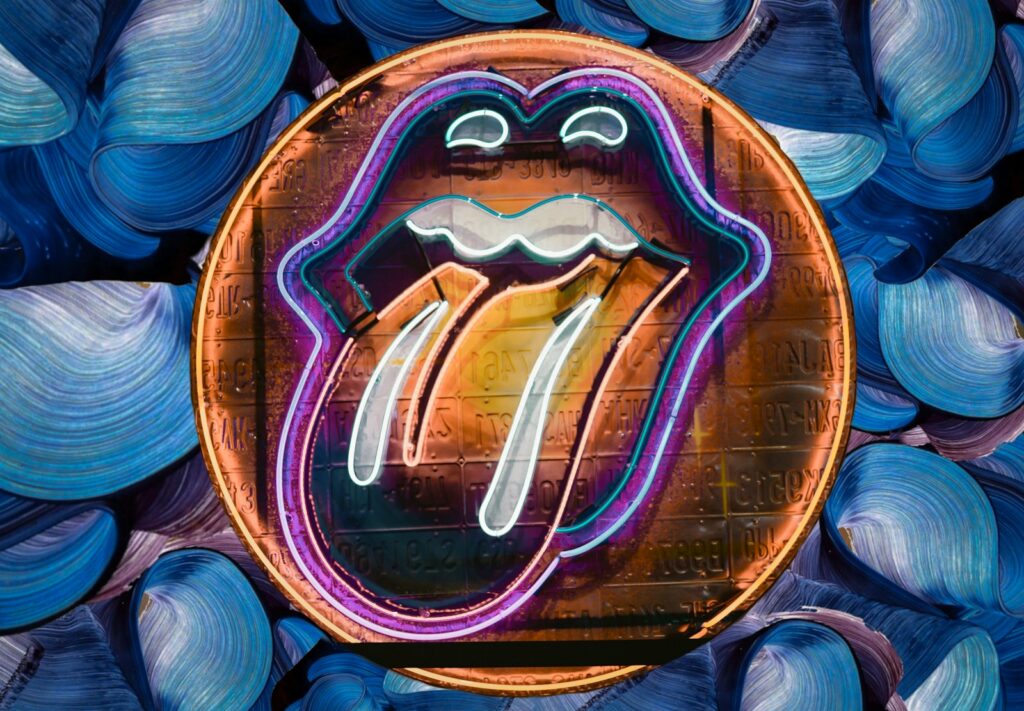
Pop art, a vibrant and revolutionary art movement, emerged in the mid-20th century, fundamentally challenging the established notions of fine art. Its origins can be traced to both Britain and the United States, where artists began to draw inspiration from the very fabric of popular and mass culture. Here’s a breakdown of the beginnings of pop art: The Roots in Britain: The Rise in the United States: READ: Monument to Victory: The Enduring Allure of the Arc de Triomphe Key Characteristics: In essence, the beginnings of pop art marked a significant shift in the art world, bringing everyday objects and mass media imagery into the realm of fine art. It was a movement that both celebrated and critiqued the consumer culture of the mid-20th century, leaving a lasting impact on subsequent artistic developments.
