
A Body of Visual Art By Ibrahim Nawaf Joharji
There is a moment in every mountain excavation when the machinery stops and the exposed layers speak for themselves. Strata of rock, compressed over millions of years, suddenly become visible as a cross-section precise, geometric, and unexpectedly beautiful. Saudi architect and visual artist Ibrahim Nawaf Joharji saw this moment repeatedly while designing hillside villas and developments across the rocky terrain of western Saudi Arabia. Most architects looked past it. Joharji looked directly at it.
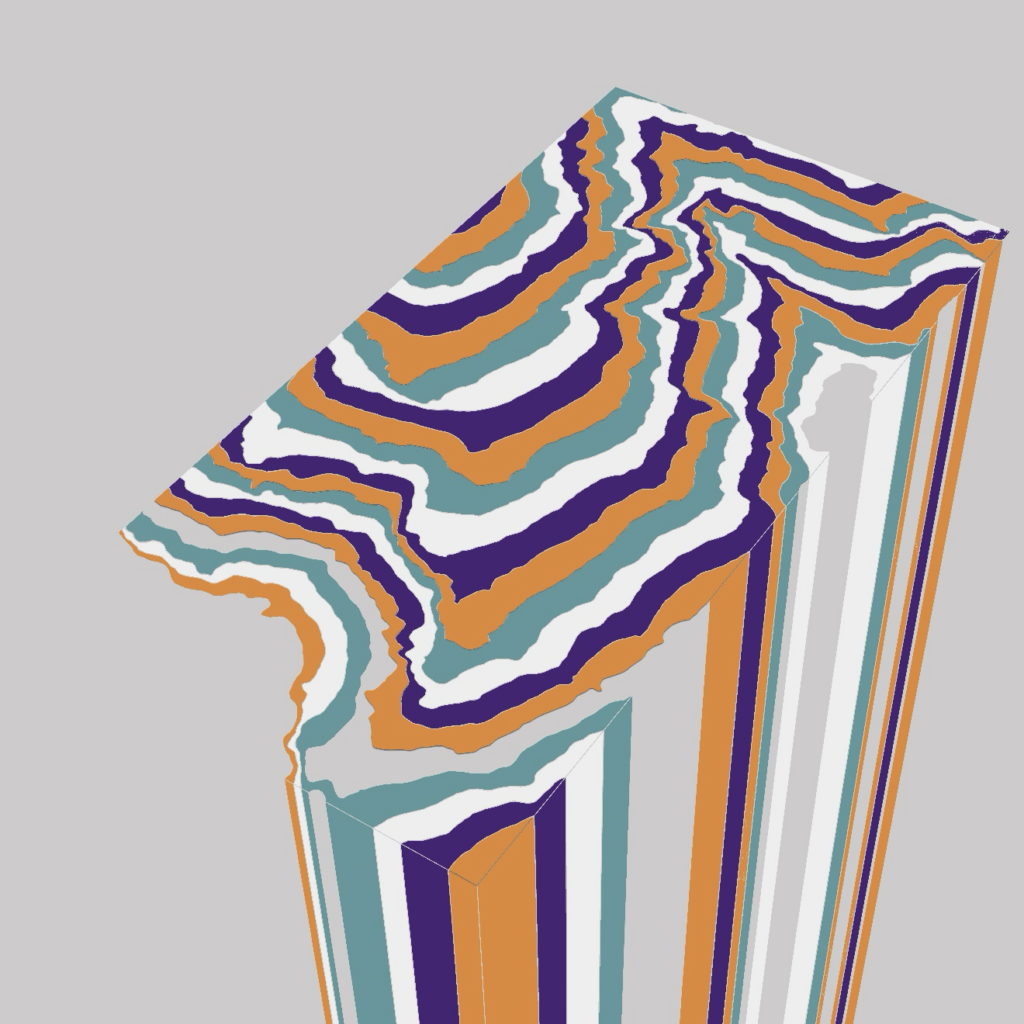
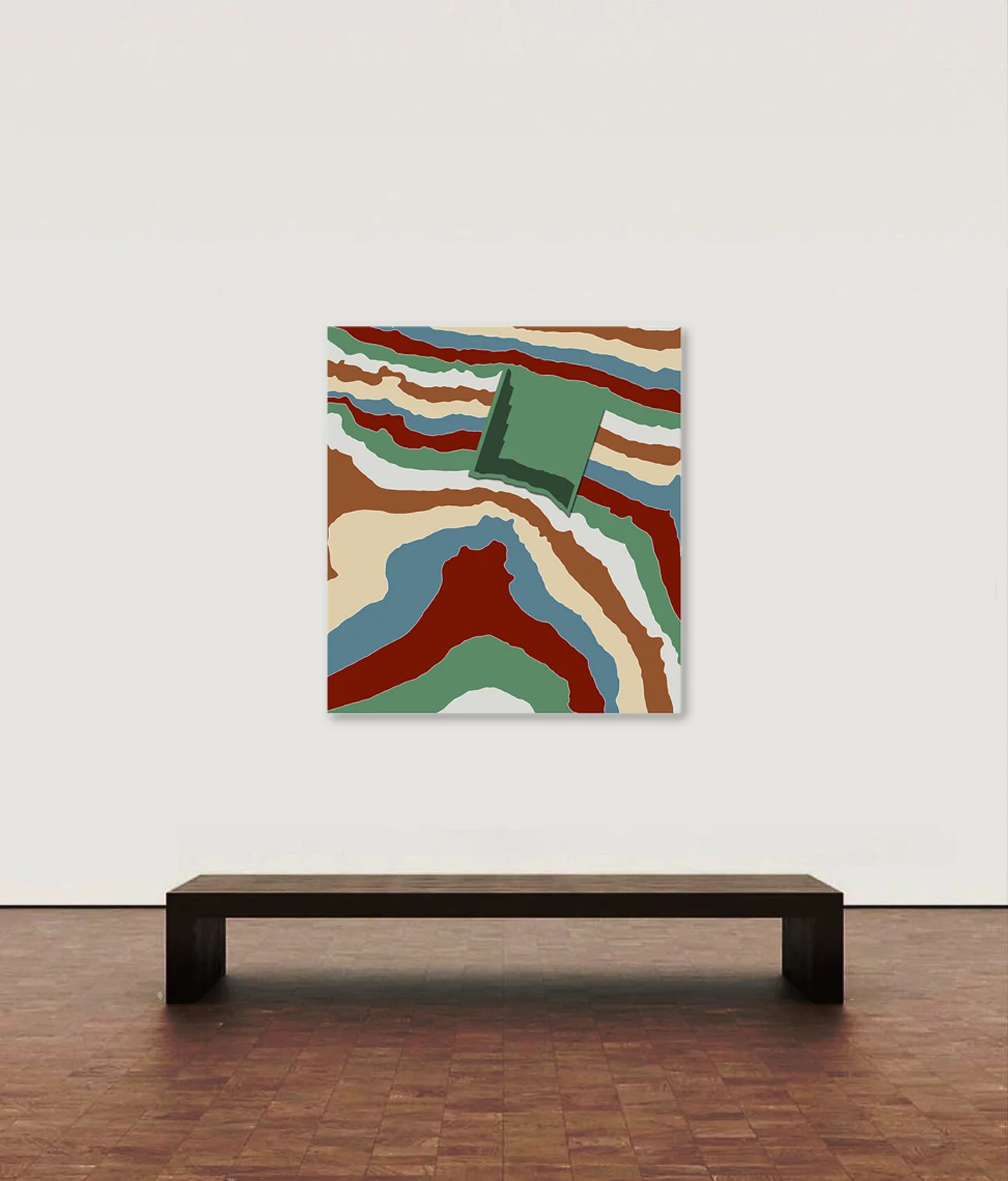
TopoArtic is the result of that sustained attention. The series extracts the mathematical data of mountain topography governed by the elevation equation z = f(x,y) and translates it into a body of visual art built around a single architectural act: the cut.
Each work in the series is a contour section, the same operation that a geologist performs when mapping terrain or that a construction team performs when preparing a slope for building. What TopoArtic isolates is the shadow that the cut produces the depth, the layering, the geological memory that becomes visible only when the mountain is opened.
The process is one of rigorous subtraction. Working with grid resolutions between one and five meters, Ibrahim Nawaf Joharji digitally slices through elevation data, removes selected strata, and recomposes what remains. The resulting forms are neither maps nor diagrams.
They are fingerprints each mountain’s contour pattern as unique as a biological signature, colored in fields that shift from geological earth tones to vivid synthetic palettes depending on the volume’s conceptual focus. Vol.7, “The First Cut,” introduced the rocky section as primary subject. Vol.9, “For the Upcoming Mansion,” presented a cut terrain as the foundation of an unbuilt house the landscape as architectural proposal rather than background condition.

Interestingly, the connection to Pop Art is not stylistic, it is structural. Pop Art elevated the overlooked object: the soup can, the comic strip, the commercial photograph. TopoArtic performs the same operation on overlooked data. The contour line on a survey sheet is the most ignored piece of information in an architectural project. It is the background before the building begins. TopoArtic places it at the center, colors it, cuts it, and asks the viewer to see what was always there before the design covered it over.
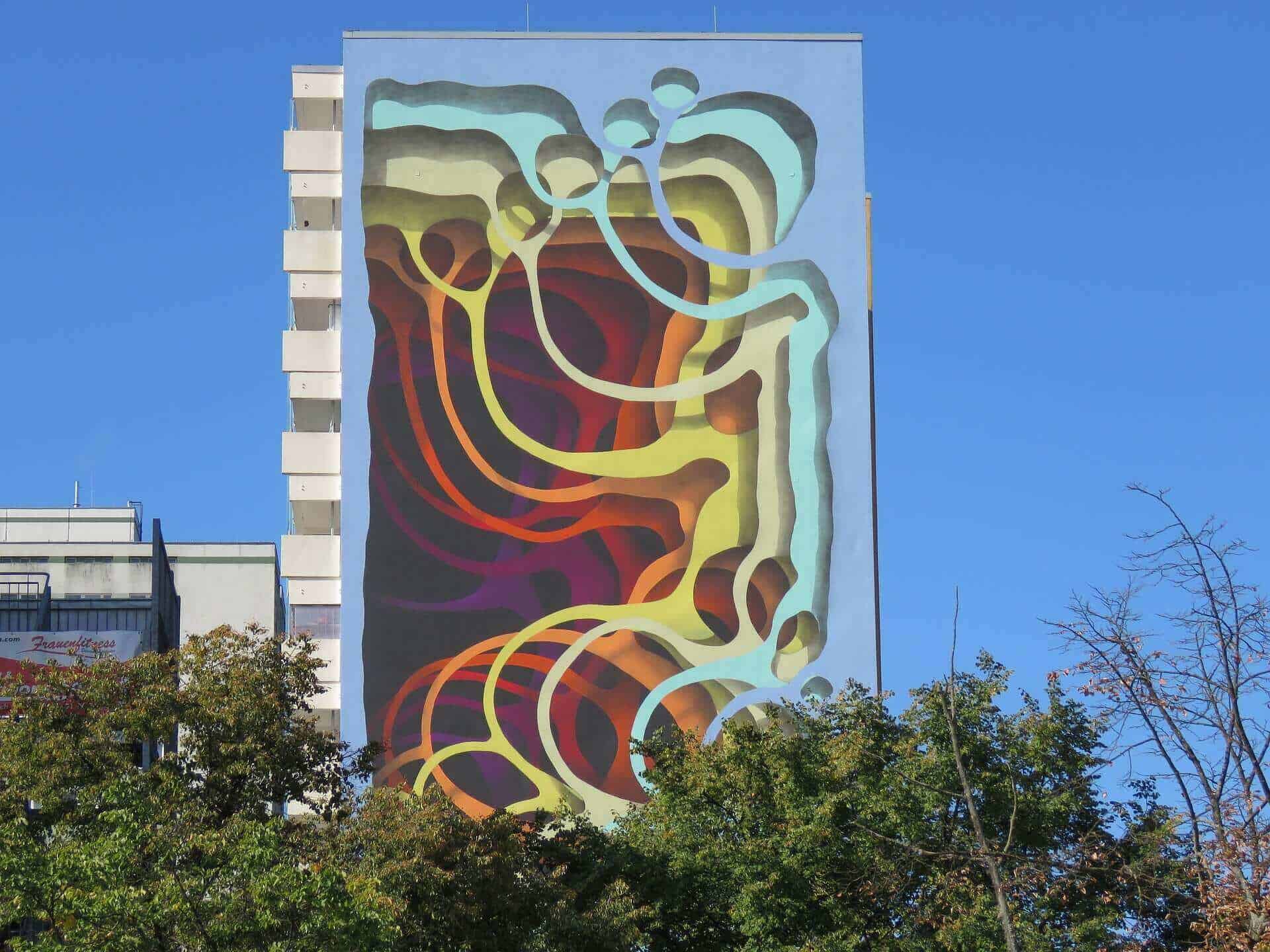
Moreover, the shadow play that results from the rock cut sections is the series’ most distinctive visual quality. When a horizontal plane is removed from the contour stack, the remaining form casts shadows downward into the void shadows that change with light angle and viewing position in the three-dimensional works.
This is not shadow as decoration. It is shadow as geological record, the same darkness that falls inside a quarry face or an excavated hillside. The cut that produces the artwork is the same cut that produces the scar. TopoArtic makes no distinction between them.
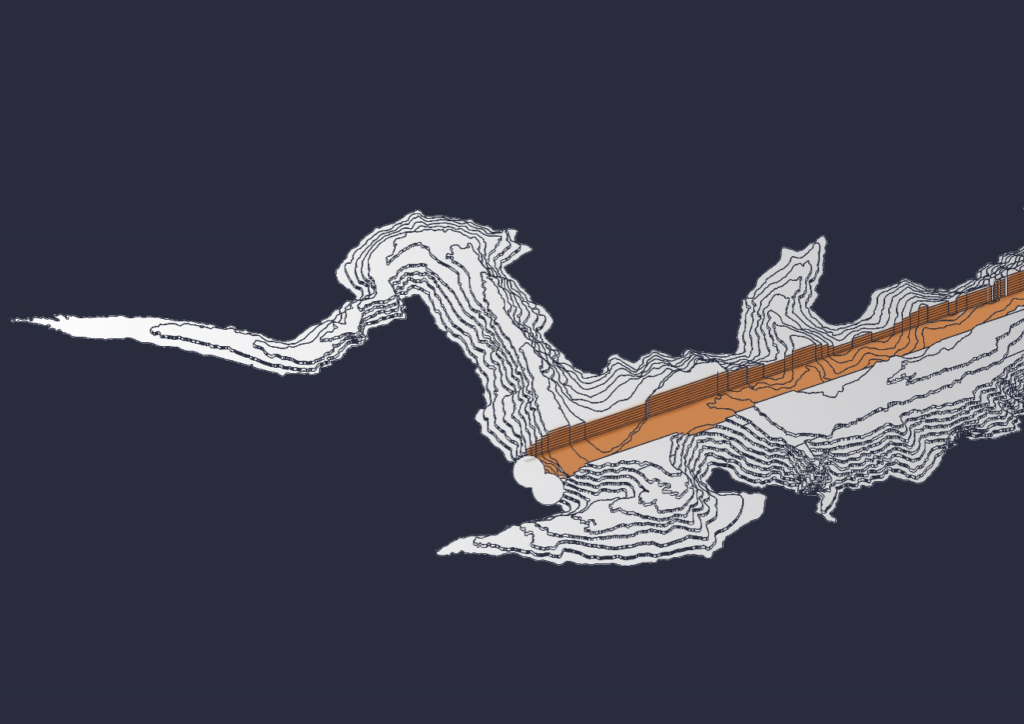
The full series, spanning thirteen volumes from pure gradient studies to human-form contours to double-mountain cuts designed to host two residences, is documented on the website for INJ Architects at injarch.com/featured_item/topoartic. The work sits at the intersection of architectural research and visual art practice, a territory that Joharji has occupied consistently since founding INJ Architects in Jeddah in 2009, and one that TopoArtic defines with particular clarity.
“The earth has always been cut. TopoArtic is simply the first body of work to treat the cut as the art.”
– Ibrahim Nawaf Joharji