
Listening to the Memory of Sacred Places
For more than four decades, multidisciplinary artist and sound designer Marko Guglielmi Reimmortal has pursued the idea that certain landscapes do not merely exist in space, but resonate as living acoustic organisms. His “Geosound Project” treats sacred sites not as picturesque backdrops or coordinates on a map, but as living archives that store a unique vibrational imprint – a sonic memory slowly being erased by modernity.
A crucial driving force behind the Geosound Project is the artistic trajectory of its creator, Marko Guglielmi Reimmortal, a visionary sound designer, visual artist and performer whose career has long moved at the intersection of experimental music, large-scale installation and advanced audio technology. He dedicates his works on the connections between sound and vision, he has founded studios, led experimental music projects, composed for film and performance, and developed immersive environments in which sound becomes a structural material as concrete as steel or stone. His large conceptual installations have been exhibited on major international stages – including the Venice Biennale and contexts linked to Art Basel Miami – and have earned him awards such as the “Lorenzo il Magnifico” prize for installation at the Florence Biennale, reinforcing his reputation as an internationally recognized and award-winning artistic director capable of orchestrating complex, multidisciplinary projects that speak to both specialized audiences and the broader public.
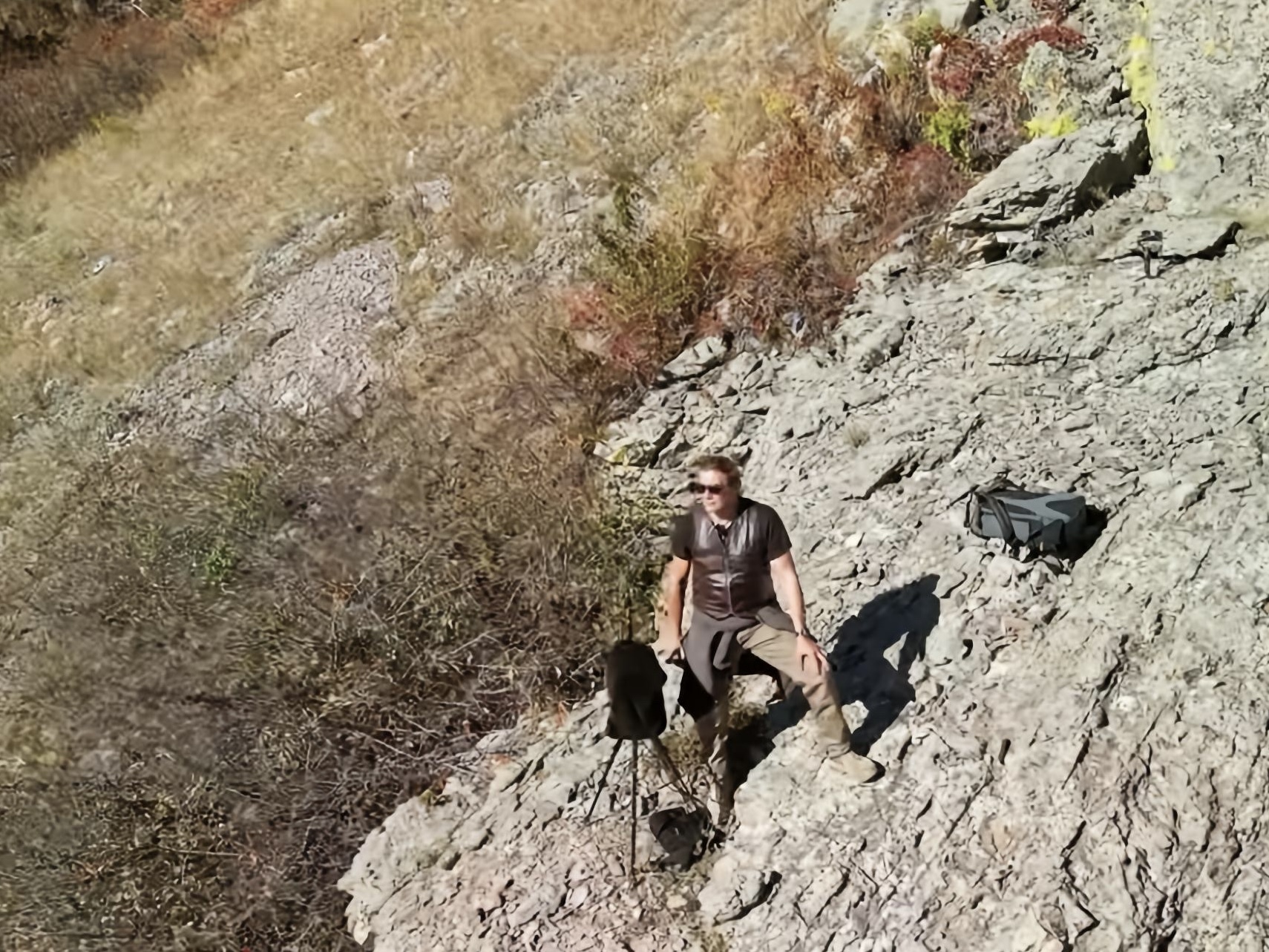
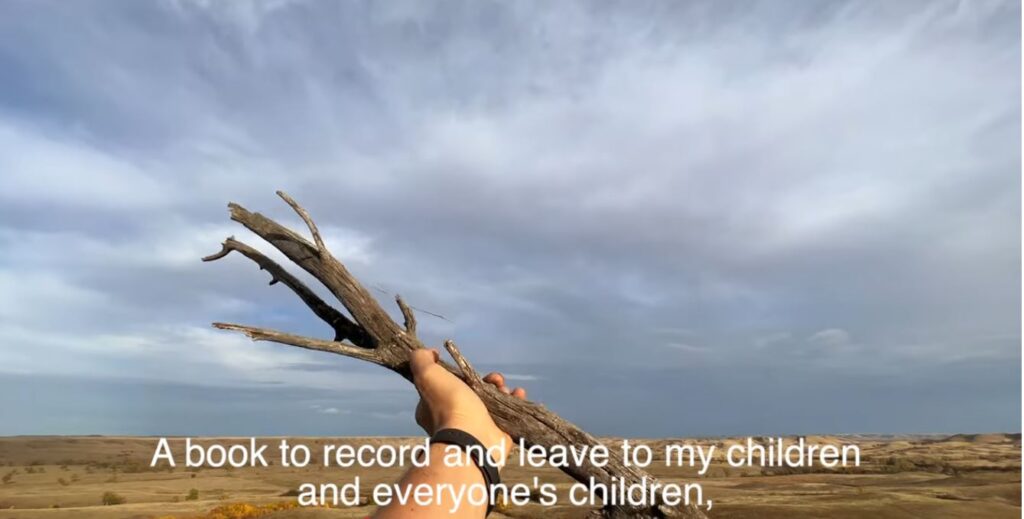
The project’s first decisive turning point came after an initiatory journey with a Sioux medicine man to Bear Butte, the sacred mountain in South Dakota where Native communities have sought visions for generations. There, Guglielmi Reimmortal understood that recording a sacred place is not a neutral technical act but a ceremony. Before a microphone is unpacked, permission must be asked twice: from the human custodians of the place, and from the land itself.
A Hidden Architecture of Sound
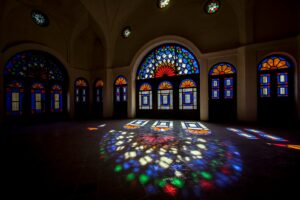
Sacred spaces around the world often share a striking property: they sound different. A canyon revered by the Navajo answers to the wind with its own inner geometry, shaping echoes that have been sculpted over millennia. Natural caves used as temples transform a single human voice into a complex cloud of resonances, amplifying specific frequencies that can propel listeners into altered states of awareness. In Amazonian sacred forests, overlapping strata of vegetation compose an intricate acoustic cathedral, where insects, birds, leaves and distant water weave a polyphonic soundscape.
Modern acoustic research is beginning to describe, in the language of physics and neurology, what Indigenous cultures and ancient builders have long intuited. Studies in archeo-acoustics show that many megalithic sites were not only aligned with celestial events but also tuned to particular frequencies. The hypogeum of ĦalSaflieni in Malta, for instance, emphasizes frequencies around 110 Hz – a band contemporary neuroscience associates with specific changes in brain activity and meditative states. Ancient architects may not have had digital analyzers, yet they clearly possessed a sophisticated empirical understanding of how shape, stone and air interact to influence human consciousness.
A Crisis You Can Hear, But Rarely See
This delicate relationship between sound, space and psyche is under unprecedented pressure. Unregulated mass tourism, accelerated urbanization, noise pollution and climate change are all reshaping the soundscapes of sacred environments faster than they can be understood. A sanctuary that once resonated with endemic bird calls now reverberates with engines and loudspeakers. A cave whose deep silence once allowed visitors to hear their own heartbeats amplified is invaded by generators and ventilation systems. Forest temples, once protected by a continuous acoustic veil of foliage, are fractured by new roads and the distant hum of traffic.
The loss is not limited to “pleasant” natural sounds. What is disappearing is a complete system of relationships: how human rituals, environmental rhythms and architectural forms once co-created specific sonic conditions that supported spiritual technologies refined over centuries. When those conditions crumble, entire ways of relating to the land and to collective memory disappear with them.
From Field Ritual to Vibrational Archive
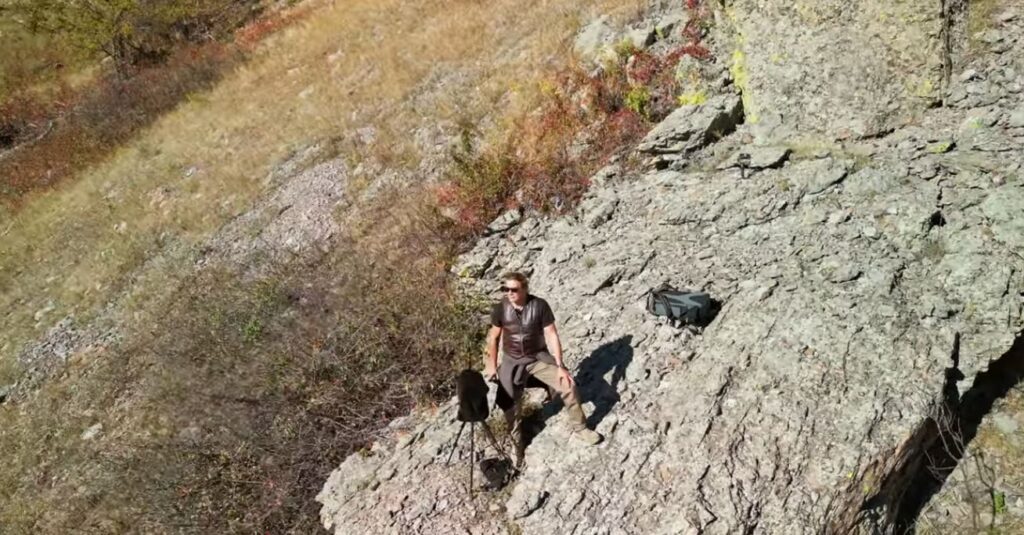
The Geosound Project by Marko Guglielmi Reimmortal positions itself as a response to this silent crisis. Its ambition is to document, with both technical precision and cultural sensitivity, the sonic fingerprints of sacred sites across the globe before they are irrevocably altered. Using advanced, often custom-designed recording chains, the project captures not only the audible spectrum but also the wider frequency bands that give each place its distinctive acoustic identity.
The methodology borrows from cinema, music production, science and ritual. Three dimensional, holophonic recordings reproduce the experience of presence within a site, while spectral analysis reveals how specific frequencies are amplified, damped or modulated by the space. Detailed resonance maps trace how sound moves through chambers, corridors, groves and rock formations. The result is not a simple collection of field recordings but a growing digital atlas of vibrational signatures – a kind of “sonic DNA” for each location.
What sets this project apart is the insistence that every recording session begins long before any equipment is switched on. Each mission is built around dialogue with Indigenous and local communities, especially those who maintain ceremonial relationships with the site. Protocols vary from place to place, but the principle is constant: no microphone enters a sacred space without the consent and guidance of its human guardians. Rituals, offerings and shared time on the land are treated not as picturesque accessories but as essential conditions for capturing an authentic vibrational portrait.
Reciprocity With the Custodians of Place
In an era when extractive approaches to culture are increasingly challenged, the Geosound Project openly rejects the model of the solitary researcher arriving, collecting data and disappearing. The work is framed as an exchange. Communities share access to their sacred places and their knowledge; in return, they receive tailored documentation that can support cultural continuity, education and even future protection efforts.
These materials can take different forms: high-resolution audio archives for local cultural centers, listening experiences designed for schools, or technical dossiers that help articulate why a specific site’s acoustic integrity deserves protection. By weaving together physics, anthropology, Indigenous epistemologies and contemporary sound design, the project builds bridges between worlds that are too often kept separate: laboratory and ceremony, research paper and oral tradition.
This hybrid approach has drawn the attention of scientists studying the physical behavior of sound in complex environments, as well as anthropologists interested in ritual acoustics and cultural memory. At the same time, it resonates with activists and community leaders seeking new tools to argue for the safeguarding of fragile landscapes whose value is not easily captured by conventional metrics.
A Museum of Frequencies, Not of Relics
The longterm vision of the Geosound Project by Marko Guglielmi Reimmortal is not to entomb these recordings in inaccessible archives, but to create a new type of institution: a “museum of frequencies.” Unlike traditional museums that display objects behind glass, such a space would invite visitors into immersive sonic environments built from the vibrational maps of sacred sites.
Imagine entering a room and finding yourself enveloped in the low, breathing resonance of a Himalayan temple at dawn, recreated with such precision that the body instinctively responds as if it were standing within the original stone walls. In another gallery, students could explore the acoustic geometries of megalithic circles or desert canyons, comparing how different civilizations shaped sound to shape consciousness. Researchers, meanwhile, would gain a powerful comparative tool, able to move between reconstructed soundscapes of geographically distant sites to investigate whether common acoustic principles emerge across cultures.
Crucially, this is not about technological spectacle for its own sake. The goal is active preservation that keeps these sonic ecologies available as living references for future generations – including the descendant communities for whom these places remain spiritually central. In a world that increasingly knows sacred sites only through silent photographs on screens, such a museum would restore an essential dimension of experience: the vibrational presence of place.
Learning to Hear the Earth Again
At its heart, the Geosound Project by Marko Guglielmi Reimmortal is less a technical program than a cultural intervention. It challenges a dominant modern sensibility that treats sound as background noise and the Earth as inert scenery. By foregrounding the acoustic lives of sacred landscapes, it reminds us that every ecosystem has a voice and that the quality of our listening shapes the quality of our relationship with the planet.
Protecting the sonic integrity of a sacred site is not a nostalgic indulgence. It recognizes these places as active interfaces between human communities and the biosphere – laboratories where complex “spiritual technologies” emerged from long, careful observation of how the world resonates. When those interfaces are drowned in noise or stripped of their vibrational subtleties, humanity loses not only heritage but ongoing sources of insight into how consciousness and environment co-create one another.
The environmental crisis is often described in terms of carbon, temperature and sea levels. The Geosound Project suggests another dimension: a crisis of listening. As forests fall silent, glaciers crack and sacred valleys fill with mechanical drones, something vital in the dialogue between humanity and the more-than-human world is being severed. Relearning how to listen – with the humility of guests rather than the entitlement of owners – becomes not just an aesthetic preference, but a cultural necessity.
In this sense, the envisioned Geosound museum is less a mausoleum than a workshop for a new kind of literacy: acoustic, ecological, spiritual. It invites visitors, scholars and community elders into a shared space where ancient intuitions and contemporary technologies can meet on equal footing. There, amid reconstructed echoes of caves, forests and stone chambers, a simple question quietly arises: if the Earth is still speaking through vibrations, are we prepared to listen – and to act on what we hear?