
A Different Kind of Wildlife Photography
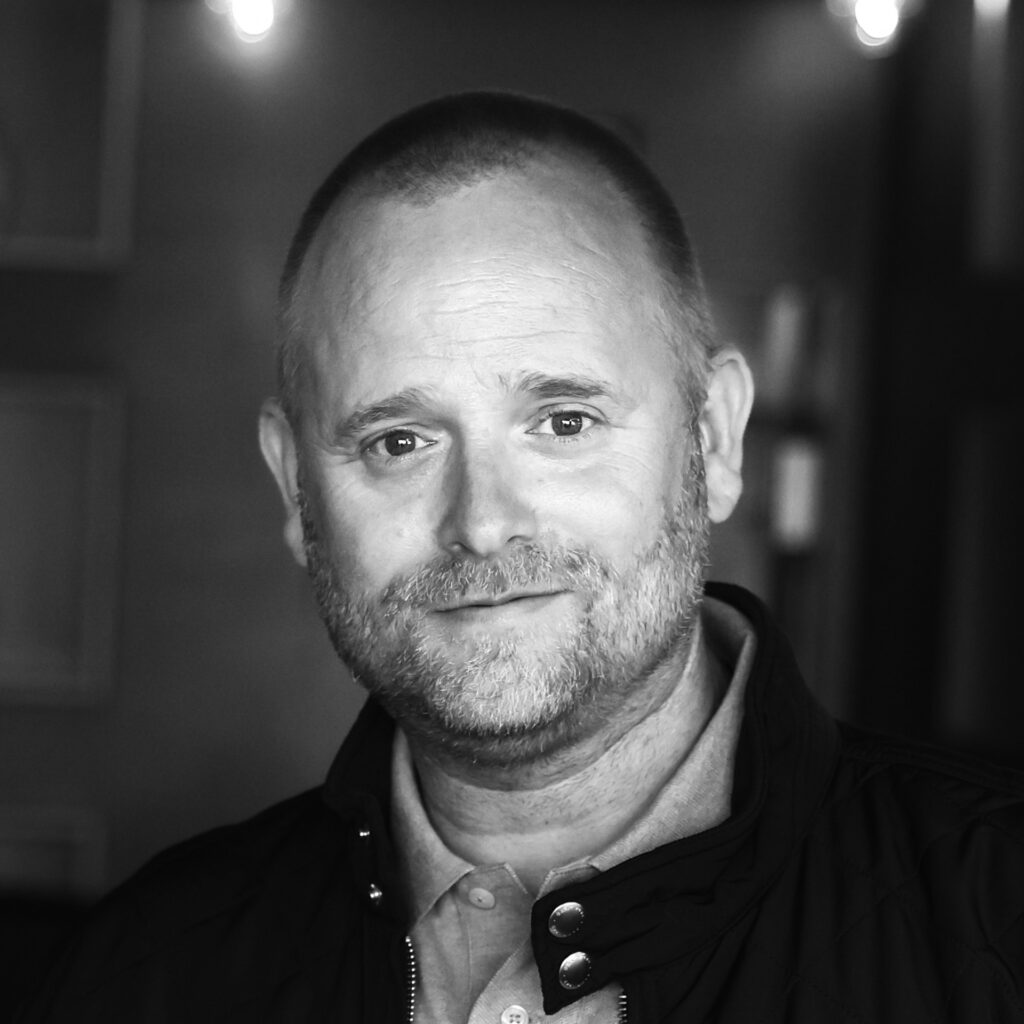
Johan Siggesson does not photograph wildlife in the traditional sense. His images feel less like documentary moments and more like encounters. There is a silence in them, a deliberate stillness that invites the viewer to pause longer than expected. In a time when wildlife photography often leans toward spectacle and saturation, Siggesson has quietly built a body of work that moves in the opposite direction.
Born in Sweden and based in Malta in the Mediterranean, Johan Siggesson has become increasingly recognised for his striking black and white wildlife photography, particularly his portraits of African animals. Lions, elephants, leopards and giraffes appear frequently throughout his work, but not in the way audiences may expect. These are not simply “lion pictures” or “elephant photos” designed to showcase technical skill or dramatic safari moments. They feel personal. Intimate, even.
There is a recurring sense that the animals are being met rather than captured.
The Power of Simplicity
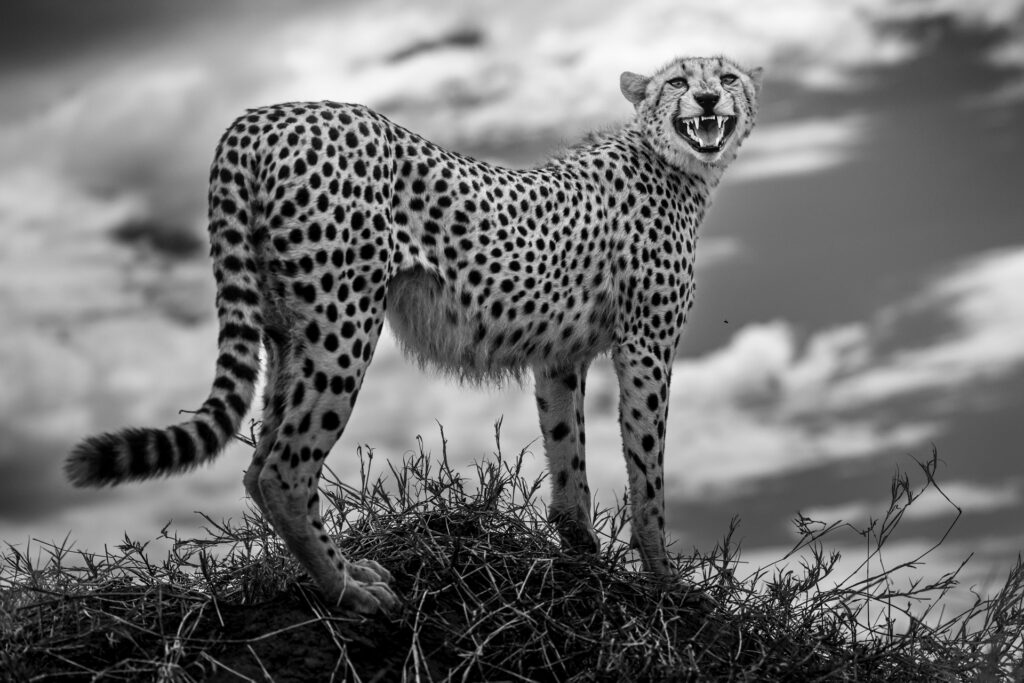
Much of Siggesson’s photography is built around reduction. Colour disappears. Backgrounds dissolve into shadow, mist or dust. What remains is form, posture, texture and expression. The result is work that sits somewhere between fine art photography and portraiture.
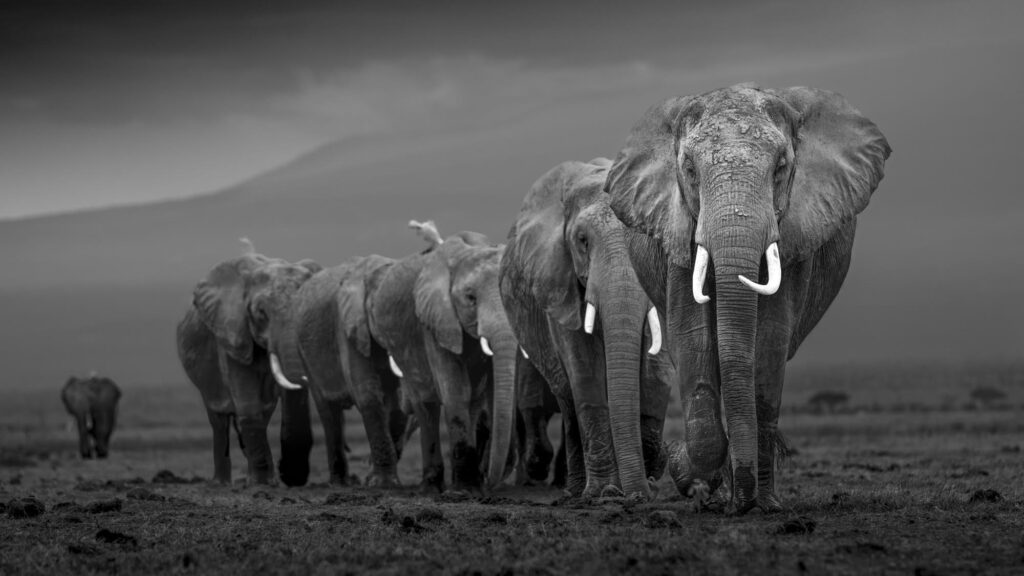
An elephant emerging through dust in Amboseli becomes almost sculptural. A lion staring directly into the lens feels less like a predator and more like an ancient presence observing the viewer in return.
What separates Johan Siggesson from many contemporary wildlife photographers is his willingness to embrace simplicity. In an era dominated by hyperreal editing and visual overload, his work feels restrained. Shadows remain dark. Atmosphere is preserved rather than polished away. Negative space becomes part of the image itself.
There are traces of Scandinavian minimalism in the compositions, but also something deeply connected to Africa in the emotional atmosphere of the work. Dust, silence, tension and scale are ever present
Patience Over Pursuit
A large part of Siggesson’s photography comes from patience rather than constant movement. He often speaks about staying at sightings long after others have left, allowing scenes to evolve naturally instead of chasing activity from one location to another.
That philosophy is visible throughout his portfolio. His photographs rarely feel rushed. They breathe.
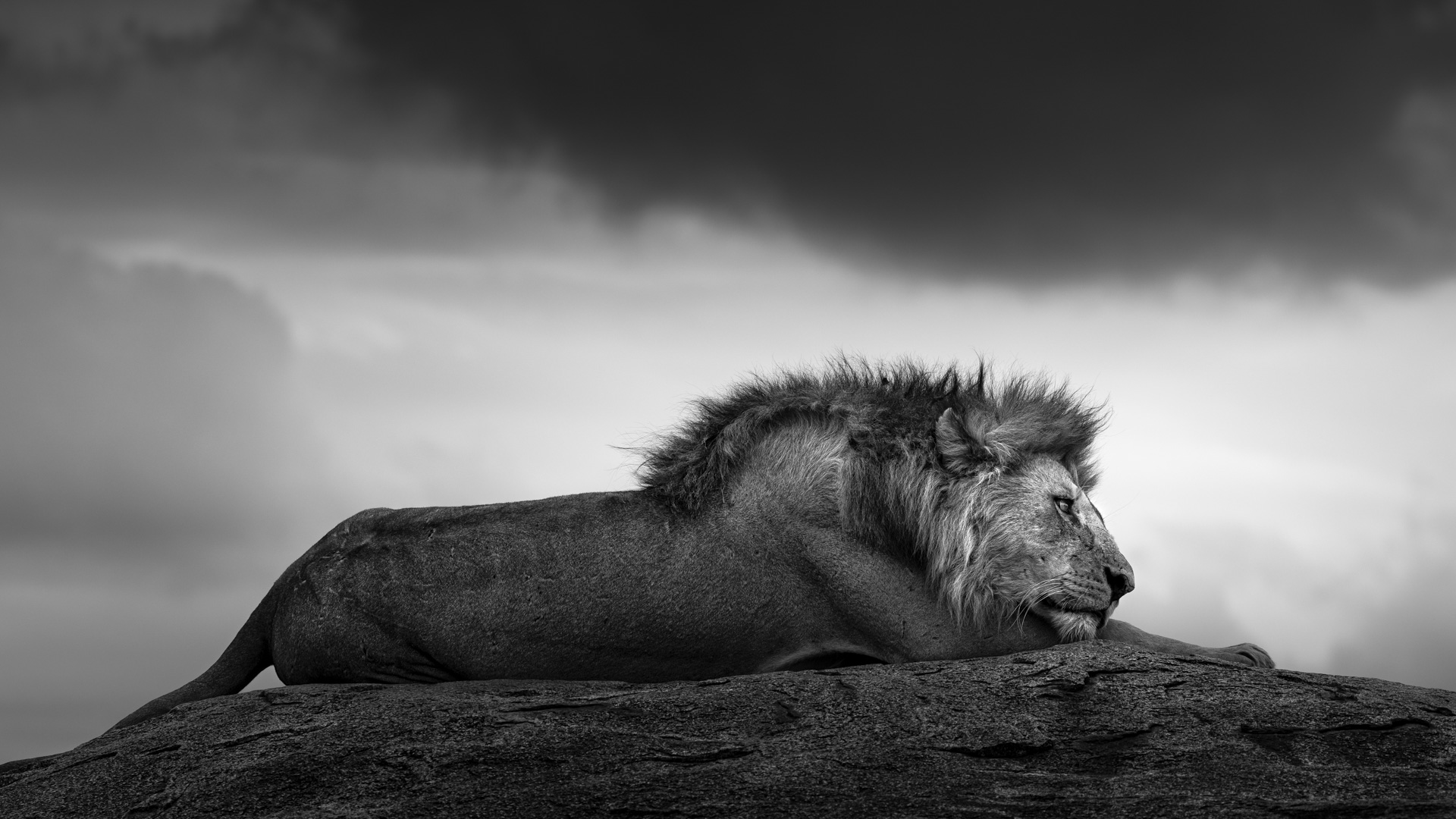
One of his most recognised images features Craig, the legendary tusker of Amboseli, photographed from a remarkably low angle that gives the elephant an almost monumental presence. Another work, “The Dreamer,” captures a quiet and introspective moment of a resting lion. Rather than focusing on aggression or dominance, the image reveals a softer and more reflective side of one of Africa’s most iconic predators. The photograph feels less like traditional wildlife documentation and more like a study of calm, presence and vulnerability.
These photographs do not rely solely on action or drama. Instead, they succeed through atmosphere and emotional tension.
Black and White as Emotional Language
For Johan Siggesson, black and white photography is not simply a stylistic decision. It functions almost as a language of its own.
By removing colour, attention shifts toward emotion, texture and presence. Wrinkles on an elephant’s skin, the scars across a lion’s face or the shape of light falling across a leopard become more pronounced. The animals appear timeless.
This approach also distances the work from conventional safari imagery. Rather than presenting wildlife as exotic spectacle, Siggesson’s photographs often feel contemplative and deeply human in mood.
A cheetah standing silently beside her cub. A giraffe framed carefully between dead trees in the Serengeti. A lioness drinking while locking eyes with the lens. These moments are understated, yet emotionally charged.
There is a quiet confidence in allowing simplicity to carry the image.
From the Wild to the Gallery Wall
Siggesson’s work has increasingly found a place beyond traditional wildlife photography audiences. His photographs are now collected as fine art prints and exhibited internationally, often displayed in large formats that emphasise detail and atmosphere.
Printed on museum-grade baryta paper using archival pigment inks, the images are intended as lasting art objects rather than temporary digital content. This focus on craftsmanship mirrors the photography itself. Nothing feels rushed or disposable.
Collectors are drawn not only to the wildlife subjects, but to the emotional atmosphere within the images. The work functions equally as nature photography and contemporary fine art.
That crossover is significant. Wildlife photography has often struggled to move beyond the documentary world into the broader fine art conversation. Siggesson’s photography helps bridge that gap.
A Quiet Voice in a Loud Visual World
Despite growing international recognition, awards and exhibitions, there remains something understated about Siggesson’s public presence. The focus consistently returns to the animals and the experience of being in the wild rather than the photographer himself.
That perspective may explain why his strongest images feel grounded rather than performative. They do not demand attention through spectacle. Instead, they invite reflection.
At a time when visual culture is increasingly driven by speed and endless scrolling, Johan Siggesson’s photography asks viewers to slow down. To observe. To sit with silence for a moment longer than usual.
And perhaps that is precisely what makes the work memorable.
In the end, Siggesson’s photography is not only about wildlife. It is about presence, atmosphere and the fragile connection between humans and the natural world.