
SUNSET Monaco: The Riviera’s Most Electrifying Canvas of Sound, Art, and Sea
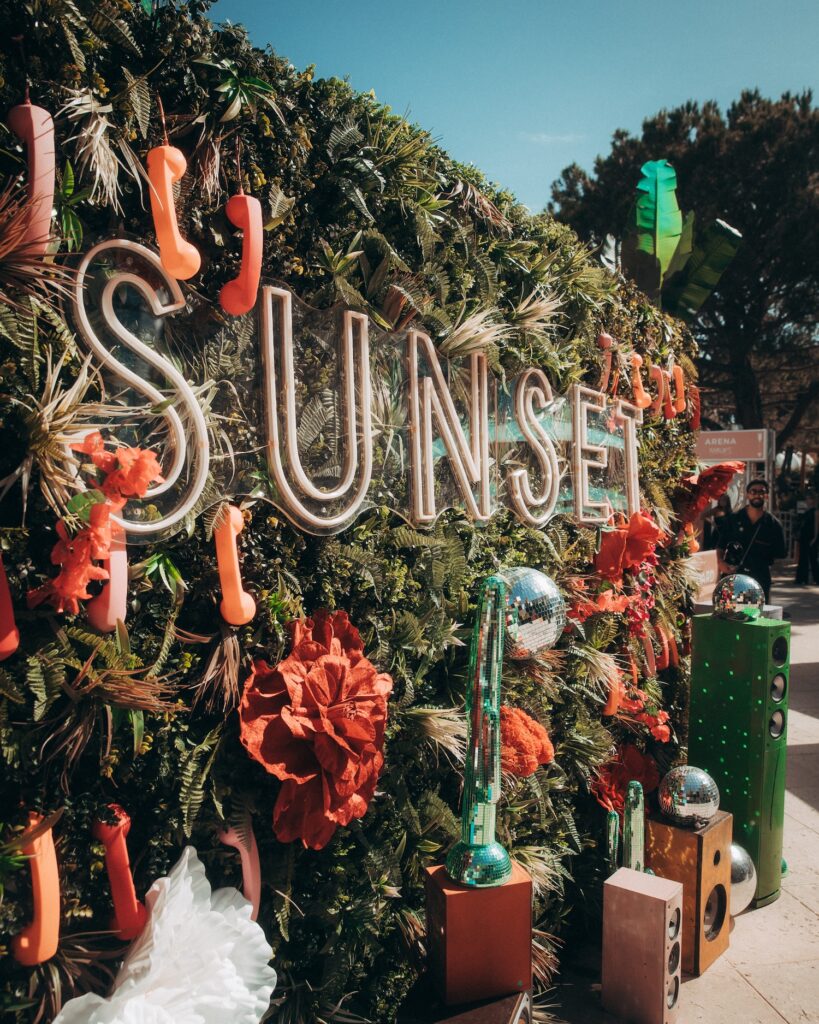
On the Mediterranean shoreline of Monaco, where the Grand Prix transforms the Principality into a global theatre of speed and spectacle, one event has steadily redefined what a beach experience can be. SUNSET Monaco is not simply a party or a music event. It operates as a living cultural platform where electronic music, contemporary art, gastronomy, and Riviera lifestyle converge into a single, fluid environment. Set against the private beach of Le Méridien Beach Plaza, it has evolved into what many now consider the most creatively ambitious and artistically diverse gathering in the South of France. A beach event that becomes a world of its own SUNSET Monaco unfolds over three days during the Formula 1 weekend, transforming a normally serene stretch of coastline into a kinetic, immersive environment. From early afternoon until late night, the beach becomes a continuously evolving stage where sound, movement, and social energy are orchestrated with precision but experienced as spontaneity. According to the official presentation of the event, SUNSET is designed as a place where “sound, style, and spontaneity” collide, creating a curated yet unpredictable atmosphere that blurs the boundaries between festival, art installation, and open-air lounge culture. What distinguishes SUNSET from other Riviera events is its refusal to remain static. The environment shifts throughout the day: daytime barefoot luxury gradually dissolves into sunset rituals, then transitions into high-intensity nighttime performances. The beach is not a backdrop but an active participant, shaping how people move, listen, and interact. A lineup that maps the global language of electronic music At the core of SUNSET Monaco’s cultural identity is its artist programming, which reads less like a conventional festival bill and more like a curated snapshot of contemporary electronic music. The 2026 lineup brings together internationally recognised figures such as DJ Tennis, Seth Troxler, Honey Dijon, PAWSA, Luciano, Carlita, and BLOND:ISH, alongside a new generation of experimental and emerging artists including Mattéo Diop, Salomé Le Chat, Alyssa & Gia, and Suze Ijo. This breadth is not incidental. The programming is deliberately constructed to reflect multiple electronic traditions: Chicago house, Detroit-informed techno, Mediterranean-inflected melodic sets, and global club culture aesthetics all coexist within the same weekend. The result is a rare form of artistic diversity where genres do not compete but interact. A sunset set can shift from deep, atmospheric house into more percussive, club-driven energy without breaking the narrative continuity of the day. This is one of SUNSET’s defining characteristics: music is treated as a continuous spectrum rather than segmented performances. Fred Allard 2026: sculptural pop art in a beach environment In 2026, SUNSET Monaco deepens its commitment to visual art through a collaboration with French contemporary artist Fred Allard. Known for his glossy, hyper-graphic sculptural works that reinterpret luxury objects and pop culture icons, Allard’s practice aligns naturally with the visual language of Monaco itself: polished surfaces, saturated color, and the tension between glamour and critique. His presence at SUNSET introduces a parallel narrative layer to the event. Sculptures and installations are integrated into the beach environment, not isolated in gallery-like zones but positioned within the flow of the space. This creates an environment where art is encountered casually, almost unexpectedly, between music sets and social moments. The effect is intentional: rather than presenting art as a separate discipline, SUNSET embeds it into the rhythm of the event. Fred Allard’s work, with its bold pop-art sensibility and reflective materiality, amplifies this dynamic, turning the beach into a temporary open-air exhibition that evolves with light, tide, and movement. Barefoot luxury and the architecture of atmosphere Beyond music and art, SUNSET Monaco’s defining achievement lies in its construction of atmosphere. The event’s setting at Le Méridien Beach Plaza offers a rare combination: direct Mediterranean access, controlled private space, and unobstructed horizon views that anchor the experience in natural spectacle. The atmosphere is often described as “barefoot luxury,” a term that captures its central paradox. The environment is highly curated yet deliberately relaxed. Guests move between sand, lounge areas, and dining spaces where champagne service, curated food concepts, and spontaneous DJ performances coexist without rigid separation. This approach creates a social environment that feels fluid rather than hierarchical. International visitors, artists, athletes, and local Riviera crowds share the same physical space, contributing to the sense of a temporary cultural microcosm. As the sun descends, the entire site shifts in tone. Light installations, reflective materials, and sea-facing structures respond to the changing sky, turning the beach into a constantly reconfiguring visual composition. When night arrives, the atmosphere intensifies without losing its openness, culminating in late-night sessions that extend the emotional arc of the day rather than interrupting it. SUNSET Monaco succeeds because it does not attempt to imitate traditional festival formats. Instead, it builds its own hybrid language, where sound, art, landscape, and social ritual merge into a unified experience. In a region already defined by excess, prestige, and spectacle, SUNSET stands out not by being louder, but by being more cohesive in its creative vision. It is this synthesis that positions it as one of the most distinctive cultural events in the South of France, and one that continues to shape the evolving identity of the Riviera itself.
Reframing Memory: The Interdisciplinary Practice of Iranian Contemporary Artist Aidin Bagheri
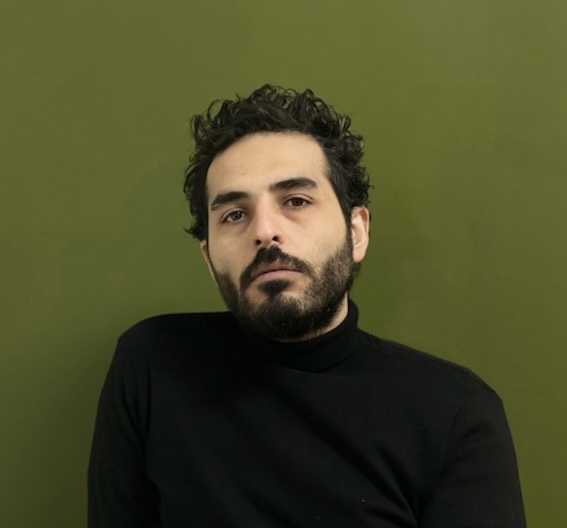
What happens when photography becomes more than a record of reality and begins to function as a form of historical inquiry? For Iranian contemporary artist Aidin Bagheri, images are not passive documents but active participants in the construction of memory, identity, and collective understanding. Working across photography, documentary cinema, installation, and academic research, Bagheri has developed a practice that challenges conventional distinctions between art and investigation, aesthetics and evidence. Based between Tehran and Paris, Bagheri belongs to a generation of artists whose work moves fluidly across disciplines while remaining deeply rooted in lived experience. Trained in sociology, he approaches image-making as a process of observation and engagement, often developing projects through extended periods of fieldwork. Rather than offering definitive conclusions, his work creates space for questions about how societies remember, how histories are constructed, and whose experiences become visible within the public record. Over the past ten years, Bagheri’s work has been featured in numerous solo and group exhibitions, steadily building his presence within both Iranian and international contemporary art contexts. Through these presentations, he has developed a body of work that bridges documentary observation and critical inquiry, engaging audiences with questions of history, identity, labor, and collective memory. The sustained visibility of his practice across diverse exhibition platforms reflects a commitment to long-term research and visual storytelling, positioning him among a generation of artists expanding the possibilities of documentary-based contemporary art. Further underscoring his professional engagement with the Iranian art community, Aidin Bagheri is an official member of the Association of Photographers of Iran and the Association of Sculptors of Iran, affiliations that reflect the interdisciplinary nature of his artistic practice and its dialogue with both photographic and spatial forms. This concern is particularly evident in Zendeh Baad Karkhaneh, a photographic series that examines the lives and working conditions of laborers in Iranian factories. Developed through close observation and sustained engagement with industrial environments, the project moves beyond conventional representations of labor to reveal the human experiences embedded within spaces of production. Bagheri’s photographs capture moments of routine, endurance, and solidarity, drawing attention to the physical and emotional realities that often remain invisible behind systems of manufacturing and economic output. A similarly nuanced approach characterizes Garden of Dolls, a project centered on a remarkable environment created from discarded dolls and recycled objects in the Iranian desert. What could easily be framed as an eccentric curiosity is instead approached with sensitivity and attentiveness. Bagheri’s photographs reveal a space shaped by imagination and resilience, where abandoned materials acquire unexpected significance. The resulting images blur the boundaries between documentary observation and visual metaphor, inviting viewers to reconsider the ways meaning is constructed through acts of creation and preservation. While photography remains central to his practice, Aidin Bagheri has increasingly expanded his exploration of social realities through documentary filmmaking. His recent documentary, Kiln House (2025), focuses on the lives of Afghan workers in Iran, a community whose experiences often remain underrepresented within dominant media narratives. Rather than relying on distant observation, the film foregrounds everyday realities, offering an intimate portrayal of labor, displacement, and dignity. Through careful attention to lived experience, Bagheri presents migration not as an abstract political issue but as a deeply human condition. What distinguishes Bagheri’s work within contemporary visual culture is the close relationship between artistic production and research. His images do not merely illustrate ideas; they participate in the generation of knowledge. This perspective informs his ongoing doctoral research at the École des Hautes Études en Sciences Sociales (EHESS) in Paris, where he investigates the role of citizen photography in contemporary Iran. At a time when billions of images circulate across digital networks, Bagheri’s research asks a fundamental question: who gets to create history? His work examines how photographs produced by ordinary individuals can function as alternative archives, preserving experiences and perspectives that frequently remain absent from institutional records. In an era increasingly defined by contested histories, digital archives, and competing versions of truth, Aidin Bagheri’s work feels especially relevant. By bringing together documentary observation, visual storytelling, and critical research, he demonstrates how contemporary art can serve as a space where memory is questioned, histories are reconsidered, and new forms of understanding become possible.
The Graphic Earth: TopoArtic and the Art of the Cut
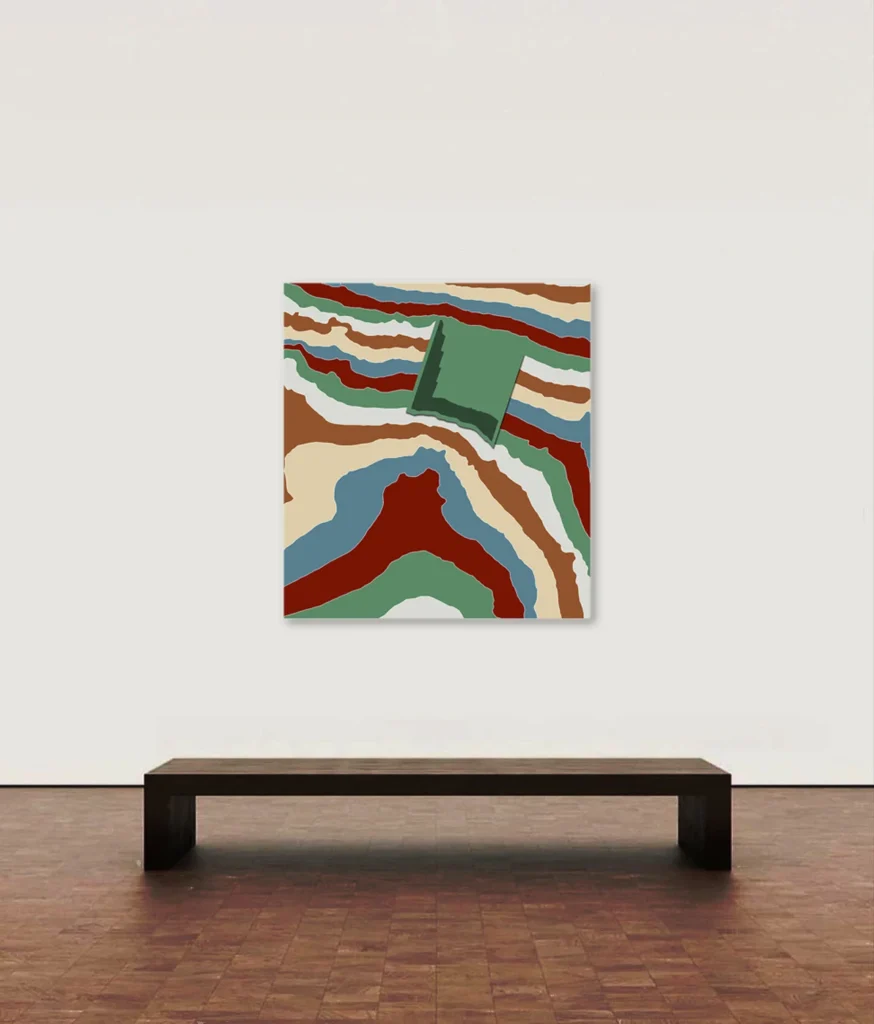
A Body of Visual Art By Ibrahim Nawaf Joharji There is a moment in every mountain excavation when the machinery stops and the exposed layers speak for themselves. Strata of rock, compressed over millions of years, suddenly become visible as a cross-section precise, geometric, and unexpectedly beautiful. Saudi architect and visual artist Ibrahim Nawaf Joharji saw this moment repeatedly while designing hillside villas and developments across the rocky terrain of western Saudi Arabia. Most architects looked past it. Joharji looked directly at it. TopoArtic is the result of that sustained attention. The series extracts the mathematical data of mountain topography governed by the elevation equation z = f(x,y) and translates it into a body of visual art built around a single architectural act: the cut. Each work in the series is a contour section, the same operation that a geologist performs when mapping terrain or that a construction team performs when preparing a slope for building. What TopoArtic isolates is the shadow that the cut produces the depth, the layering, the geological memory that becomes visible only when the mountain is opened. The process is one of rigorous subtraction. Working with grid resolutions between one and five meters, Ibrahim Nawaf Joharji digitally slices through elevation data, removes selected strata, and recomposes what remains. The resulting forms are neither maps nor diagrams. They are fingerprints each mountain’s contour pattern as unique as a biological signature, colored in fields that shift from geological earth tones to vivid synthetic palettes depending on the volume’s conceptual focus. Vol.7, “The First Cut,” introduced the rocky section as primary subject. Vol.9, “For the Upcoming Mansion,” presented a cut terrain as the foundation of an unbuilt house the landscape as architectural proposal rather than background condition. Interestingly, the connection to Pop Art is not stylistic, it is structural. Pop Art elevated the overlooked object: the soup can, the comic strip, the commercial photograph. TopoArtic performs the same operation on overlooked data. The contour line on a survey sheet is the most ignored piece of information in an architectural project. It is the background before the building begins. TopoArtic places it at the center, colors it, cuts it, and asks the viewer to see what was always there before the design covered it over. Moreover, the shadow play that results from the rock cut sections is the series’ most distinctive visual quality. When a horizontal plane is removed from the contour stack, the remaining form casts shadows downward into the void shadows that change with light angle and viewing position in the three-dimensional works. This is not shadow as decoration. It is shadow as geological record, the same darkness that falls inside a quarry face or an excavated hillside. The cut that produces the artwork is the same cut that produces the scar. TopoArtic makes no distinction between them. The full series, spanning thirteen volumes from pure gradient studies to human-form contours to double-mountain cuts designed to host two residences, is documented on the website for INJ Architects at injarch.com/featured_item/topoartic. The work sits at the intersection of architectural research and visual art practice, a territory that Joharji has occupied consistently since founding INJ Architects in Jeddah in 2009, and one that TopoArtic defines with particular clarity. “The earth has always been cut. TopoArtic is simply the first body of work to treat the cut as the art.” – Ibrahim Nawaf Joharji
