
How Social and Ecological Justice Relates to Real Estate: And What about Tiny Homes?
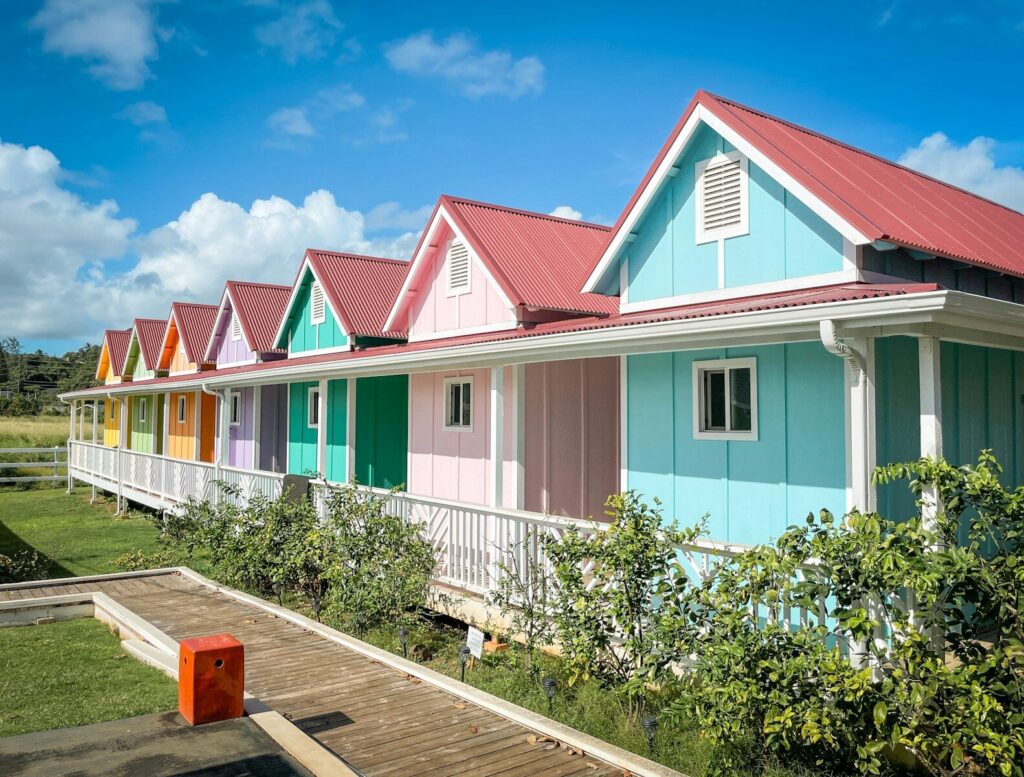
D. Sidney Potter Shares Expert Insights on Real Estate and Tiny Homes This is a topic matter that is worth revisiting given real estate is always an applicable conversation trend that is always germane. Many will pontificate that a community can strengthen its own traditional environmental knowledge through the integration of social and ecological justice. As an example, the conservation effort of increasing deforestation for charcoal production in Ghana is of concern. Similar to what I’ve mentioned in pervious articles, this is a moral dilemma for the Western world given they have already benefited from the exploration and exploitation of land through their own insidious exploits worldwide – for which BRIC nations and the Southern hemisphere in general would like to exploit as well (which is harmful ecologically), but is getting pushback from Western nations. To offset the economic commerce lost by third world countries, they have been asked to tap on the brakes in mineral exploration. But should they? Realistically thinking, why should the black and brown of this world be deprived of achieving their “highest and best use” (an oft used real estate term connected to commercial development), just like “whitie” did in the industrial revolution of the 19th century! Aren’t they entitled to their nut as well. Right? Maybe not! Kinda! Notwithstanding and as a result, the Western world has essentially capitulated to a form of “payola” – as some critics have coined it, in that billions will be paid out over the next decade for unexploited real estate. The price tag currently paid by Western nations is $300 billion payable by 2035, which is substantially below the $1.3 trillion the underdeveloped nations are asking. More specifically, it’s known as the New Collective Quantified Goal for climate finance, finalized by the UN at the COP29 summit in Baku, the capital and commercial hub of Azerbaijan. This agreement dictates the amount of financial support wealthy nations are expected to provide or mobilize for developing countries, in return they do not industrialize and pollute the world. Notwithstanding the latter, there is a substantial body of work that explores this very topic matter as highlighted in the title of this exploratory concept. As an understatement, the apex between real estate and SEJ (Social and Ecological Justice) is nearly a scholastic enclave of its own. This short article will only explore two facets in relation between real estate and the apex of social and ecological justice, because quite frankly, there are multiple angles. The tenacles are far too many to cover on a cursory examination and what this article is tasked in accomplishing. As such, the first task is to highlight the classical and emerging views of SEJ as it pertains to real estate, and by real estate – that is meant by the more primal aspects of the real estate industry – either it be land development, climate and topography changes, residential home sales or geography and war. Meaning for example as it relates to home sales, how does ecological irresponsibility and social mandates effect the value of real estate, and vice versa. The second task is to highlight traditional approaches and recent approaches to solve issues as it pertains to real estate social and ecological justice. Nature of Social and Ecological Justice in Terms of Both Classical and Emerging Views There are some sociologists and academic theoreticians who have theorized that the crux of social and ecological justice as it relates to real estate has as its most basic tenant – is to concern itself around the environmental impact of residential and commercial developments. And in relation to that, that consideration should be given to thinking outside of the box on how home ownership can be attained outside of the basic model. An example of alternative models to home ownership will be discussed later, but first, let’s talks about a very big topic, that being tiny homes, are lack thereof. What about Tiny Homes? Cutting edge and stylistic home models today suggest consideration should be taken into account when assessing the environmental impact to the footprint of living communities, in addition to placing a larger emphasis to communities that in the past where marginalized when taking into account home living arrangements. As an additional postulation, I would recommend that the major home developers of this nation, such as the Pulte, KB Homes, Lennar, and Shea Homes, start to mass produce tiny homes on site like there is NO tomorrow! Following the tried-and-true playbook of master planned communities since the beginning days of Del Webb, the same cookie cutter approach can be done for tiny homes, whose petite size of 100 to 400 square feet, with most popular designs clustering around 225 square feet, would be perfect for any community that is facing a housing shortage. This compact footprint makes a tiny house roughly nine times smaller than a standard single-family home. Least one not forget, ADU’s, otherwise known as accessory dwelling units, provide flexibility for a tiny home owner to build (or move) a standalone ADU on their plot of land to accommodate an aging parent, a displaced friend – or get this, even as a rental (I mean why not. Go home or go Big). Notwithstanding, this scenario will necessitate a minimum acreage of at least a 4,300 square feet lot, as to avoid an overcrowded visual Smorgasburg of tiny homes clustered together like a UN refugee camp. Presently, ADU’s are all the rage now in hundreds of cities, counties, municipalities and parishes across the country given their medicinal effect on the housing shortage. But in the big picture, ADU’s are really only a Band-Aid on the housing crisis. The ultimate beauty of tiny homes is that nearly everything connected to its development, is American made, by American workers, on American fuckin’ soil. Taking a page out of Henry Fords’ mantra that his assemble-line workers ought to be able to afford the cars they build, much can be said with the advent, industrialization and commoditization of tiny home communities. Much the same way the industrial
What to Expect in the Commercial and Residential Real Estate Market in 2026 – D. Sidney Potter
D. Sidney Potter Explains What to Expect The general consensus amongst many market makers in 2026 is a carbon copy of 2025, but slightly more tempered. Nothing wrong with a more somber and palliated forecast, given the heretical nature of 2025, which saw many unforeseeable events. Even jaded fellows such as myself were impressed. To name a few surprises in 2025 – that likely won’t make a reappearance in 2026, include the following: Given the excessive near hypnotic hoopla over Artificial Intelligence, the acceleration of this tech science was unprecedented this past year and was particularly vulnerable to cyber threats. Other outliers included a late surge in buyer activity in Fall 2025 (no one saw that coming, despite high interest rates), the increasing cost of homeowner overhead as a result of climate change (think insurance rates), and the rise of geopolitical events affecting buyer behavior. Real Estate Outlook in Commercial Here’s a bullet list of top highlights to expect in year 2026 of the year of our good Lord over the next 12 months – God willing. And in the light of divine positivity, commercial is discussed first given the sedate nature of residential in 2026, as notated above. Here goes for commercial: Market Outlook in Residential Fortunately, and to lighten the mode a bit, it’s not as if residential real estate is expected to go to Hell in a Handbasket, per se. As a disclaimer, not certain why the religious overtone for this year’s predictions, since real estate is a fairly agnostic science. Could be because the time of year – since forecasts are written during a religious themed month that includes the likes of Christmas, Kwanzaa and Hanukkah. But here goes, and in the interest of brevity, more bullet points: Summary Despite a tranquil and placid forecast for residential in 2026, there will be more movement in some areas; given sales are expected to rise, interest rates are expected to lower, and the pricing on residential product will slow down. Commercial on the other hand is a whole different ball of wax, where one can expect a whole lotta hollering from the back pews as buyers will raise prices and more trades will be at record highs. Until then, rest easy and say a pray to the real estate Gods, in that there are more winners then losers over the next year. Amen. Author Bio Real estate writer D. Sidney Potter is based in Southern California. He has a PhD (ABD) from the University of Arizona, a law degree (Juris Master) from Florida State University College of Law and a bachelor’s degree (BA) from Cal Poly Pomona in political science.
